Why People Left Europe for a New Life

Quakers arriving in America aboard the ship Friend's Adventure

Imagine this: you are told that tomorrow, you must leave your home. You can only take what fits in a small bag, won’t see your friends again., and may never see your family again. Think of how you would feel if you don’t know exactly where you’re going, but knowing that the journey could take … Read more

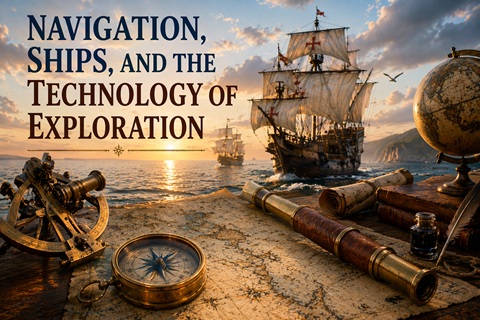
Navigation, Ships, and the Technology of Exploration

Navigation instruments in the age of exploration

How Did New Tools Make the Age of Exploration Possible? During the Age of Exploration, new technologies made it possible for sailors to travel farther and more safely than ever before. Advances in ship design, navigation tools, and mapmaking allowed explorers to cross vast oceans and discover new lands. Innovations like the caravel, the compass, … Read more

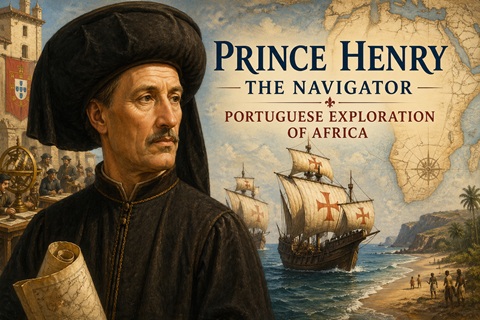
Prince Henry the Navigator: Portuguese Exploration of Africa

Prince Henry the Navigator

During the early 1400s, Portugal became a leading nation in ocean exploration, largely due to the efforts of Prince Henry the Navigator. Although he did not personally lead voyages, Prince Henry supported and organized expeditions along the west coast of Africa. His work helped improve navigation, expand trade, and increase European knowledge of the world. … Read more

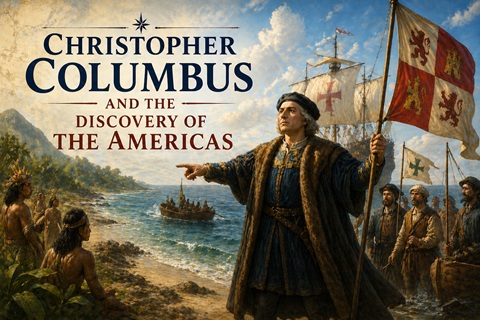
Christopher Columbus and the Discovery of the Americas

Christopher Columbus and the Discovery of the Americas

A World Ready for Exploration In 1492, Christopher Columbus set sail across the Atlantic Ocean, hoping to find a new route to Asia. Instead, he reached lands that were previously unknown to Europeans, which later became known as the Americas. His voyages marked the beginning of lasting contact between Europe and the New World. While … Read more

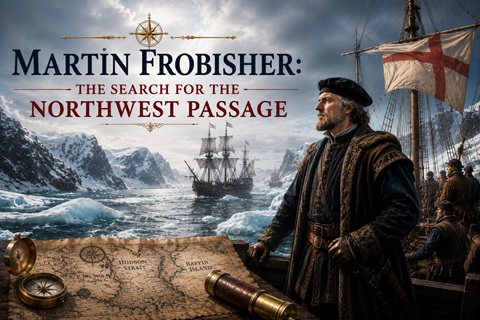
Martin Frobisher: The Search for the Northwest Passage

In the late 1500s, English explorer Martin Frobisher set out to find a Northwest Passage—a sea route through North America that would connect the Atlantic Ocean to Asia. Although he never found this passage, his voyages helped expand European knowledge of the Arctic and strengthened England’s role in exploration. Frobisher’s journeys highlight both the determination … Read more

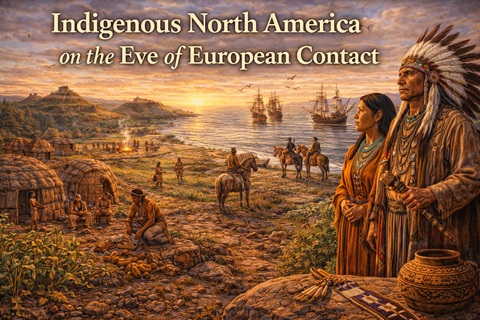
Indigenous North America on the Eve of European Contact

Indigenous America on the Eve of European Contact

Just before European explorers arrived in the late 1400s, North America was home to millions of Indigenous people living in diverse and complex societies. These groups had developed unique cultures, economies, and political systems shaped by their environments. From large cities in the Mississippi River Valley to nomadic groups on the Great Plains, Indigenous North … Read more

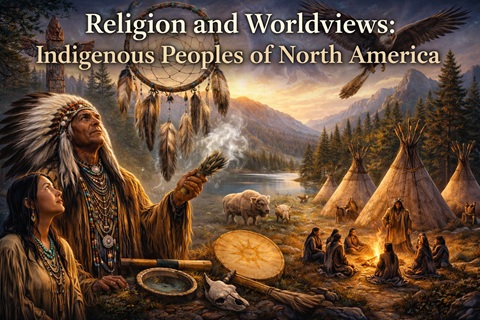
Religion and Worldviews: Indigenous Peoples of North America

Sacred traditions of Indigenous North America

Indigenous peoples of North America developed rich and diverse belief systems long before European contact. These worldviews were deeply connected to nature, community, and a sense of balance in the world. Rather than separating religion from daily life, spiritual beliefs were woven into hunting, farming, storytelling, and governance. In this lesson, students will explore how … Read more

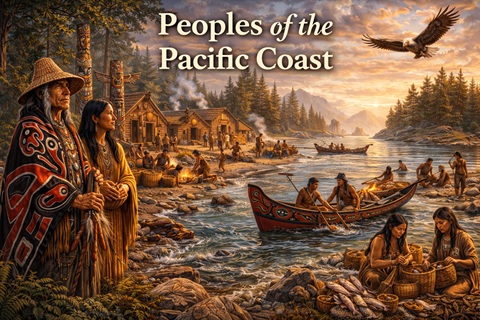
Peoples of the Pacific Coast

Indigenous village life on the Pacific coast

The Pacific Coast of North America, stretching from present-day California to Alaska, was home to Indigenous peoples who developed rich and complex societies supported by abundant natural resources. With access to the ocean, forests, and rivers, these groups built permanent villages and created vibrant cultures centered on fishing, trade, and art. In this lesson, students … Read more

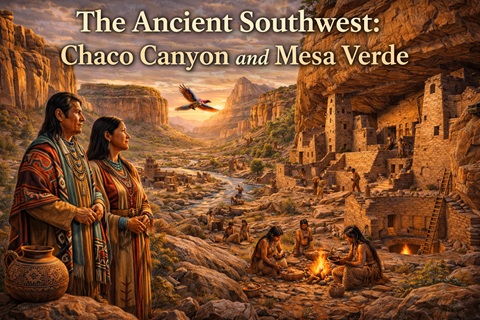
The Ancient Southwest: Chaco Canyon and Mesa Verde

Exploring Mesa Verde and Chaco Canyon

In the dry lands of the American Southwest, Indigenous peoples known today as the Ancestral Puebloans built remarkable communities that adapted to a challenging environment. Two of the most well-known sites, Chaco Canyon and Mesa Verde, reveal advanced knowledge of architecture, farming, and community organization. In this lesson, students will explore how these societies thrived … Read more

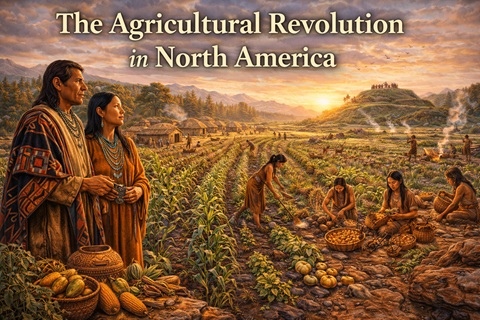
The Agricultural Revolution in North America

Indigenous agriculture at sunset

The Agricultural Revolution in North America marked a major turning point in how Indigenous peoples lived. Instead of relying only on hunting and gathering, many groups began to grow crops and settle in one place. This shift led to the development of villages, new technologies, and more complex societies. In this lesson, students will explore … Read more