The First Americans

The First Americans: Migration into a New World

Migration into a New World Thousands of years ago, long before recorded history in North America, the first people began arriving on the continent. These early groups traveled great distances, likely from Asia, during the last Ice Age. Over time, they spread across North and South America, adapting to different environments and developing unique cultures. … Read more

Indigenous North America on the Eve of European Contact
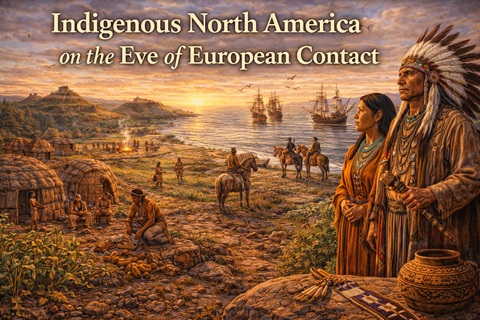
Indigenous America on the Eve of European Contact

Just before European explorers arrived in the late 1400s, North America was home to millions of Indigenous people living in diverse and complex societies. These groups had developed unique cultures, economies, and political systems shaped by their environments. From large cities in the Mississippi River Valley to nomadic groups on the Great Plains, Indigenous North … Read more
Religion and Worldviews: Indigenous Peoples of North America

Sacred traditions of Indigenous North America

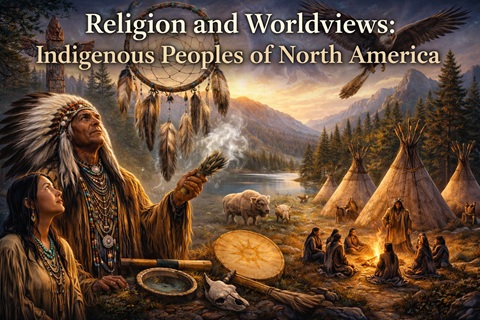
Indigenous peoples of North America developed rich and diverse belief systems long before European contact. These worldviews were deeply connected to nature, community, and a sense of balance in the world. Rather than separating religion from daily life, spiritual beliefs were woven into hunting, farming, storytelling, and governance. In this lesson, students will explore how … Read more

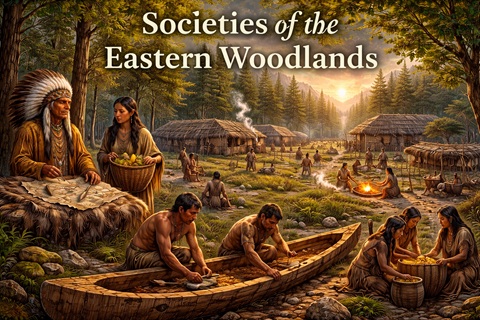
Societies of the Eastern Woodlands

Eastern Woodlands village at sunset

The Eastern Woodlands region of North America was home to many Indigenous societies that developed complex cultures adapted to forests, rivers, and seasonal changes. Stretching from the Atlantic Ocean to the Mississippi River, this region provided abundant natural resources that supported farming, hunting, and trade. In this lesson, students will explore how Eastern Woodlands peoples … Read more

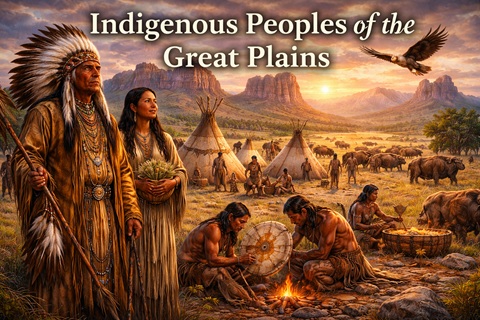
Indigenous Peoples of the Great Plains

Indigenous life on the Great Plains

The Great Plains region of North America is a vast area of grasslands stretching from the Mississippi River to the Rocky Mountains. Indigenous peoples of this region developed ways of life that were closely tied to the land, especially the movement of buffalo herds. Over time, these societies adapted to changing conditions, including the introduction … Read more

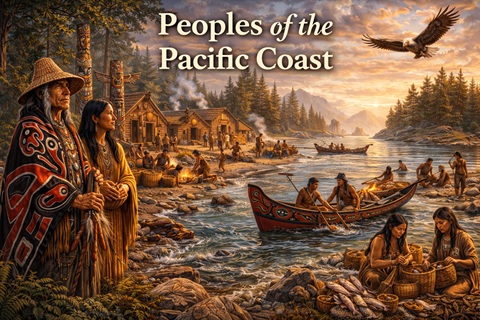
Peoples of the Pacific Coast

Indigenous village life on the Pacific coast

The Pacific Coast of North America, stretching from present-day California to Alaska, was home to Indigenous peoples who developed rich and complex societies supported by abundant natural resources. With access to the ocean, forests, and rivers, these groups built permanent villages and created vibrant cultures centered on fishing, trade, and art. In this lesson, students … Read more

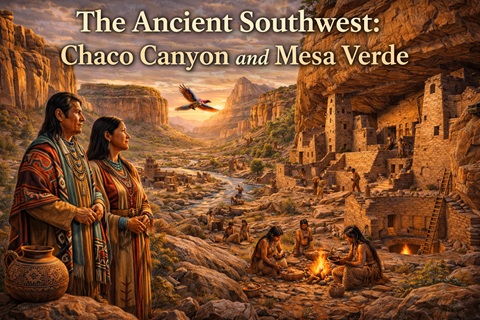
The Ancient Southwest: Chaco Canyon and Mesa Verde

Exploring Mesa Verde and Chaco Canyon

In the dry lands of the American Southwest, Indigenous peoples known today as the Ancestral Puebloans built remarkable communities that adapted to a challenging environment. Two of the most well-known sites, Chaco Canyon and Mesa Verde, reveal advanced knowledge of architecture, farming, and community organization. In this lesson, students will explore how these societies thrived … Read more

The Agricultural Revolution in North America

Indigenous agriculture at sunset

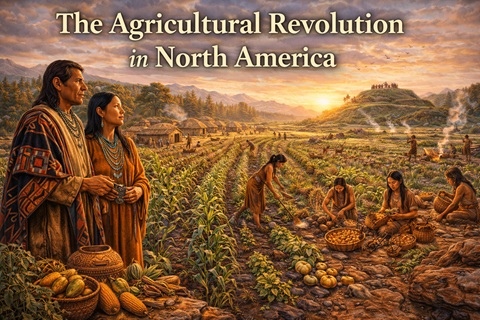
The Agricultural Revolution in North America marked a major turning point in how Indigenous peoples lived. Instead of relying only on hunting and gathering, many groups began to grow crops and settle in one place. This shift led to the development of villages, new technologies, and more complex societies. In this lesson, students will explore … Read more

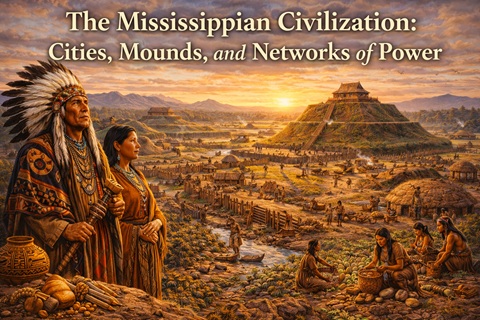
The Mississippian Civilization: Cities, Mounds, and Networks of Power in Pre-Columbian North America

Mississippian city at sunset

The Mississippian Civilization was one of the most advanced and organized societies in pre-Columbian North America. Flourishing between about 800 and 1600 CE, these societies built large cities, created massive earthen mounds, and developed extensive trade networks across the continent. Centered in the Mississippi River Valley, Mississippian peoples used agriculture—especially corn—to support growing populations and … Read more

Hunter-Gatherer Societies of Early North America

Hunter-gatherers by a river

Long before farming and permanent settlements, the first peoples of North America lived as hunter-gatherers. These early societies relied on hunting animals, fishing, and gathering wild plants for survival. Their way of life required deep knowledge of the environment and the ability to adapt to changing seasons. In this lesson, students will explore how hunter-gatherer … Read more