From Discovery to Settlement in Early America

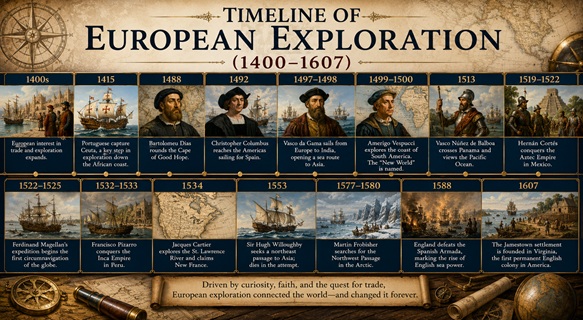
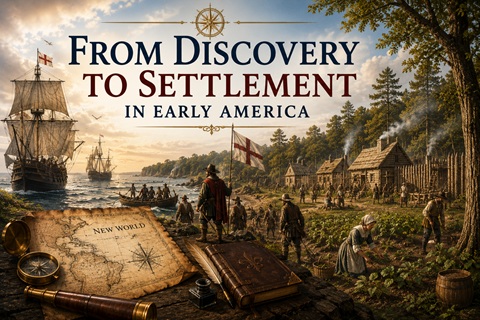
Overview The period from European discovery to permanent settlement in the Americas marked a major turning point in history. Beginning with voyages like those of Christopher Columbus, European nations explored, claimed land, and eventually established colonies. Over time, these efforts shifted from exploration to settlement, as people built communities and created new societies. This transition … Read more

Indigenous North America on the Eve of European Contact

Indigenous America on the Eve of European Contact

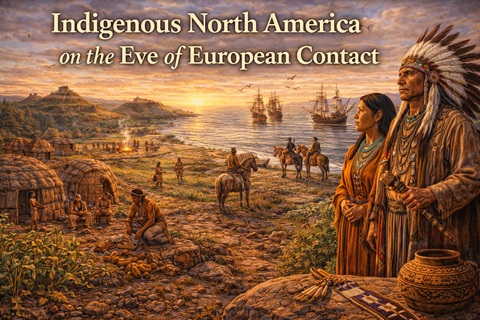
Just before European explorers arrived in the late 1400s, North America was home to millions of Indigenous people living in diverse and complex societies. These groups had developed unique cultures, economies, and political systems shaped by their environments. From large cities in the Mississippi River Valley to nomadic groups on the Great Plains, Indigenous North … Read more

Roanoke Island: The Lost Colony Mystery

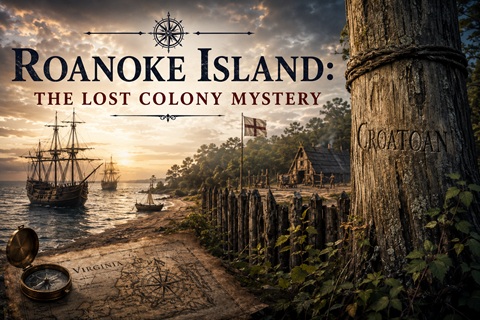
In the late 1500s, England attempted to establish one of its first colonies in North America on Roanoke Island. Led by Sir Walter Raleigh and governed by John White, the settlement mysteriously disappeared. When White returned after a supply trip to England, he found the colony abandoned with only a single clue: the word “CROATOAN.” … Read more

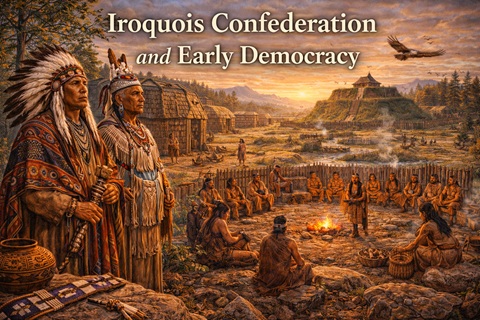
Iroquois Confederation and Early Democracy

Iroquois leaders at council gathering

Long before the formation of the United States, the Iroquois Confederation—also known as the Haudenosaunee, or “People of the Longhouse”—created a powerful alliance of nations in northeastern North America. This confederation brought together several groups under a shared system of governance that emphasized unity, peace, and cooperation. In this lesson, students will explore how the … Read more

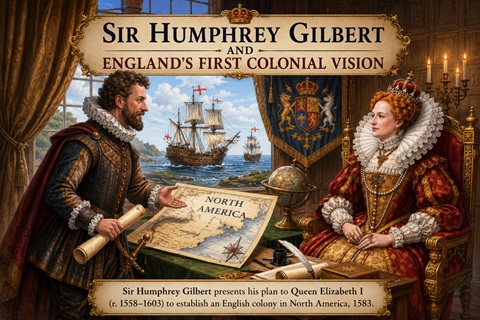
Sir Humphrey Gilbert and England’s First Colonial Vision

In the late 1500s, Sir Humphrey Gilbert helped shape England’s early ideas about building colonies in North America. Unlike earlier explorers who focused mainly on discovery, Gilbert believed England should establish permanent settlements. Although his own efforts were unsuccessful, his vision influenced future English colonization, including later attempts in the New World. What You Will … Read more

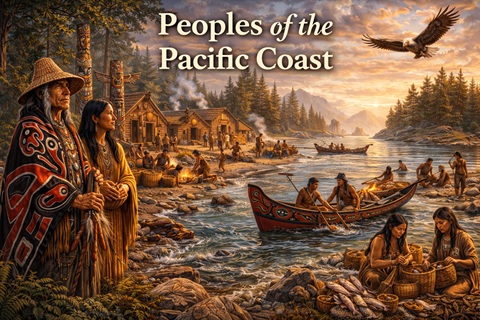
Peoples of the Pacific Coast

Indigenous village life on the Pacific coast

The Pacific Coast of North America, stretching from present-day California to Alaska, was home to Indigenous peoples who developed rich and complex societies supported by abundant natural resources. With access to the ocean, forests, and rivers, these groups built permanent villages and created vibrant cultures centered on fishing, trade, and art. In this lesson, students … Read more

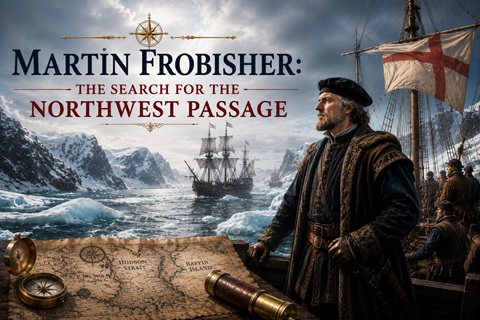
Martin Frobisher: The Search for the Northwest Passage

In the late 1500s, English explorer Martin Frobisher set out to find a Northwest Passage—a sea route through North America that would connect the Atlantic Ocean to Asia. Although he never found this passage, his voyages helped expand European knowledge of the Arctic and strengthened England’s role in exploration. Frobisher’s journeys highlight both the determination … Read more

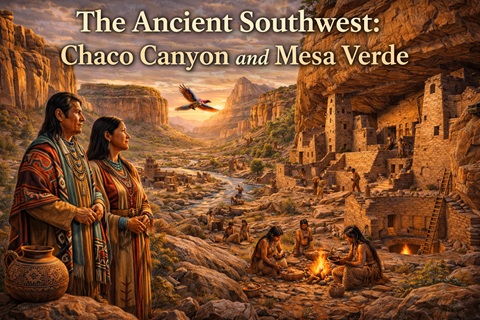
The Ancient Southwest: Chaco Canyon and Mesa Verde

Exploring Mesa Verde and Chaco Canyon

In the dry lands of the American Southwest, Indigenous peoples known today as the Ancestral Puebloans built remarkable communities that adapted to a challenging environment. Two of the most well-known sites, Chaco Canyon and Mesa Verde, reveal advanced knowledge of architecture, farming, and community organization. In this lesson, students will explore how these societies thrived … Read more