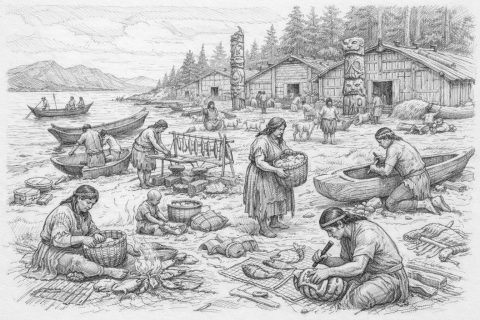
If you traveled along the Pacific coast of North America long before European explorers arrived, you would have encountered a very different landscape from most other parts of the continent. Instead of deserts or wide grasslands, this region was covered with dense forests, rushing rivers, and rugged coastlines. Giant cedar trees grew hundreds of feet tall. Rivers were filled with fish. The ocean provided an endless supply of food.
Because of these rich natural resources, the Indigenous peoples of the Pacific Coast developed some of the most complex and prosperous societies in North America before 1500.
Unlike many Native groups in other parts of the continent, these coastal peoples did not rely heavily on farming. Instead, they built thriving cultures based on fishing, hunting sea mammals, gathering plants, and trading along the coast.
Their communities were famous for their large wooden houses, beautifully carved totem poles, powerful seafaring canoes, and elaborate ceremonies. These societies were organized into clans and ranked families, and their art and storytelling traditions reflected deep spiritual connections to the natural world.
Today, the descendants of these peoples—including the Tlingit, Haida, Kwakwaka’wakw, Chinook, Coast Salish, and many others—continue to live along the Pacific Coast, preserving traditions that stretch back thousands of years.
The Geography of the Pacific Coast
The Pacific Coast region stretches from present-day Alaska south through British Columbia, Washington, Oregon, and into northern California. This region is sometimes called the Pacific Northwest Coast.
Several natural features helped shape the cultures of this region:
- Thick forests of cedar, spruce, and fir trees
- Rugged coastlines filled with islands and bays
- Rivers flowing from mountain ranges into the ocean
- Cool, rainy climates that supported rich plant life
Perhaps the most important natural resource in this region was salmon.
Every year, millions of salmon swim from the Pacific Ocean back into coastal rivers to spawn. For thousands of years, Pacific Coast peoples organized much of their lives around these seasonal salmon runs.
Salmon provided a reliable source of food that could be eaten fresh or preserved by drying and smoking. This allowed communities to store food for the winter months.
Because food was abundant, many Pacific Coast societies were able to support large permanent villages.
Major Peoples of the Pacific Coast
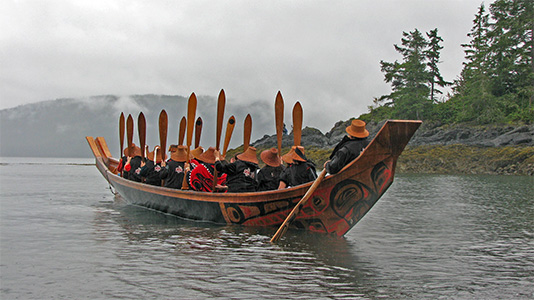
Many different Indigenous groups lived along the Pacific Coast, each with their own languages and traditions. Some of the best known include:
- Tlingit – Alaska and northern British Columbia
- Haida – islands of Haida Gwaii off the Canadian coast
- Kwakwaka’wakw – northern Vancouver Island region
- Coast Salish – Washington and southern British Columbia
- Chinook – mouth of the Columbia River
- Yurok – northern California coast
Although these groups spoke different languages and had distinct cultural traditions, they shared many similar ways of life shaped by the coastal environment.
Great Cedar Forests: The Tree of Life
One of the most important natural resources of the Pacific Coast was the western red cedar tree.
Cedar trees were incredibly useful. Indigenous peoples sometimes called cedar “the tree of life” because almost every part of it could be used.
From cedar wood, people built:
- Houses
- Canoes
- Totem poles
- Tools and utensils

Cedar bark could be woven into:
- Clothing
- Mats
- Baskets
- Rope
Even cedar roots were used for sewing and weaving.
Because cedar trees were so important, many Pacific Coast cultures developed traditions that honored and respected the tree when it was cut.
Village Life on the Coast
Most Pacific Coast peoples lived in permanent villages located near rivers or along the coastline.
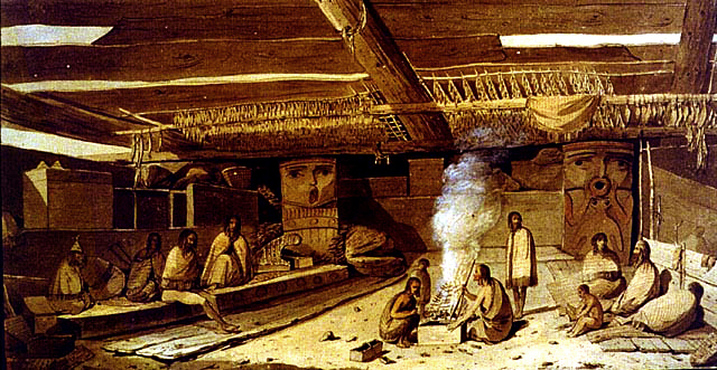
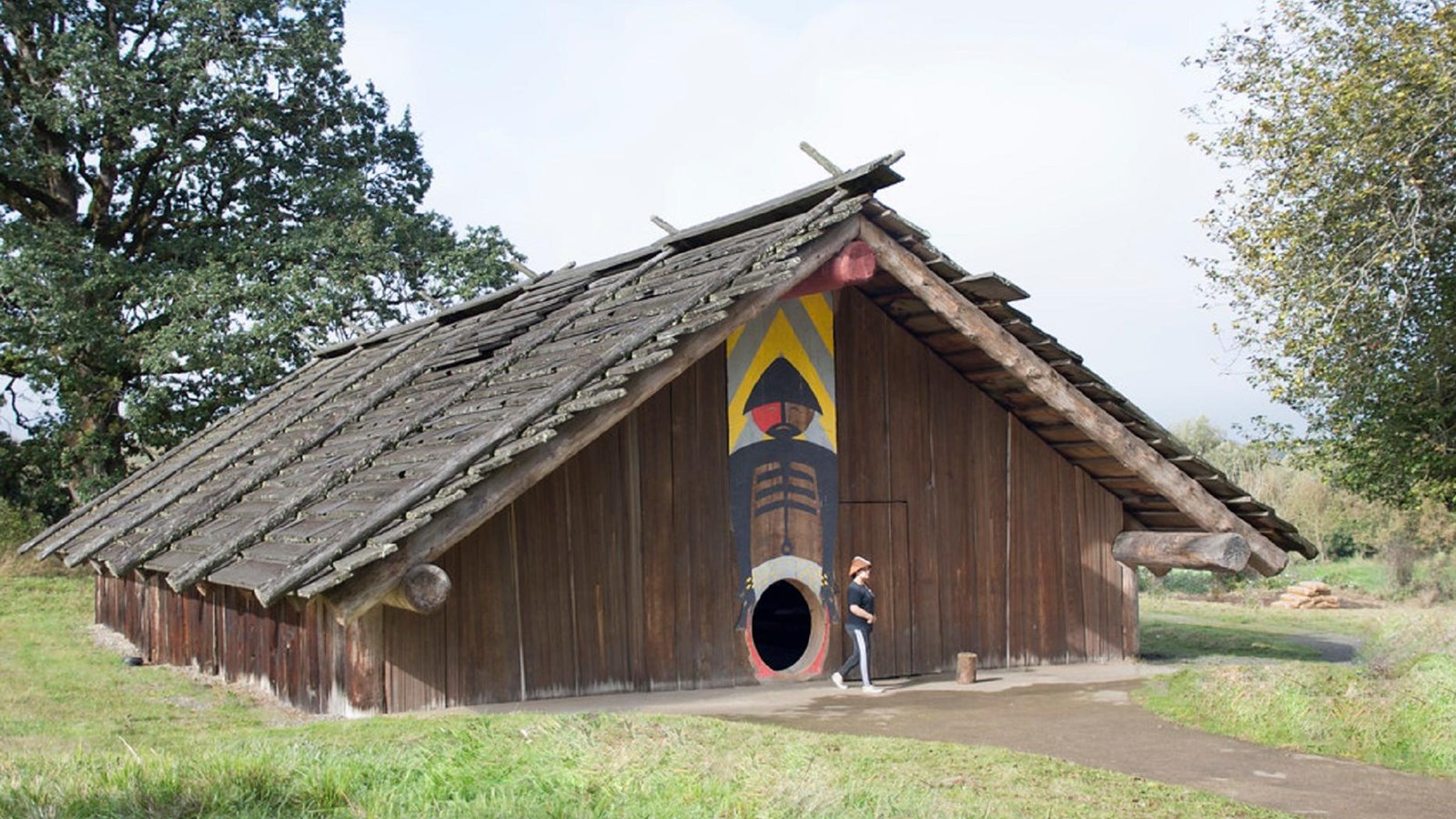
These villages often contained large wooden houses made from cedar planks. Some houses were more than 100 feet long and could hold several related families.
Inside the house:
- A central fire provided heat and light.
- Wooden platforms were used for sleeping.
- Food and supplies were stored along the walls.
- Carved decorations often represented clan animals or spirits.
Because coastal peoples had access to abundant food sources, villages could grow quite large. Some communities contained hundreds of residents.
Masters of the Sea: Canoes and Ocean Travel
Pacific Coast peoples were also skilled boat builders and navigators.

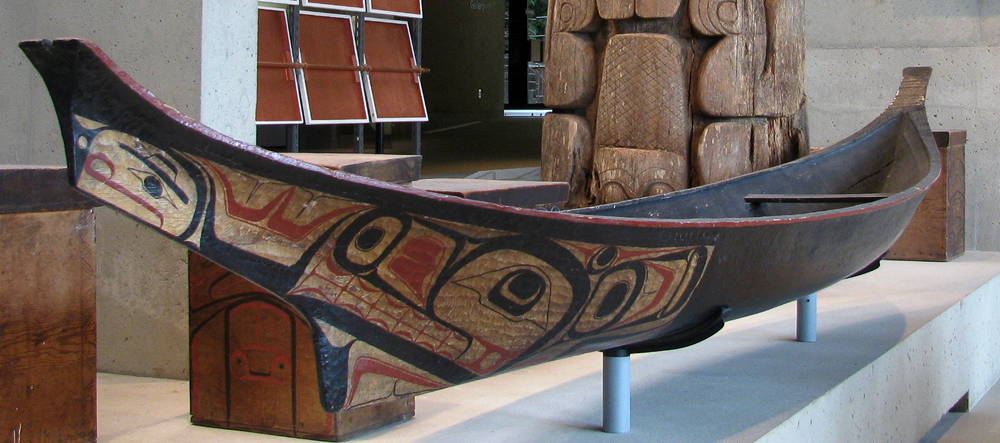
They carved enormous dugout canoes from single cedar logs. Some of these canoes could carry twenty or more people.
These vessels were strong enough to travel long distances along the Pacific coastline and between islands.
Canoes were used for:
- Fishing
- Hunting whales and sea mammals
- Transporting goods
- Visiting other villages
- Warfare
Because travel by water was so important, coastal peoples developed strong traditions of navigation and seafaring knowledge.
Fishing and Food Gathering
Fishing formed the foundation of life along the Pacific Coast.

The most important fish was salmon. During the annual salmon runs, entire villages gathered along rivers to catch fish using nets, traps, and spears.
Once caught, salmon were often:
- Smoked
- Dried
- Stored in large quantities
This preserved food for winter months.
Other important foods included:
- Halibut
- Cod
- Shellfish
- Seaweed
- Seals and sea lions
- Berries and edible plants
Because food was so abundant, Pacific Coast societies did not need to move frequently. Many communities lived in the same villages for generations.
Social Structure and Clans
Pacific Coast societies developed complex social systems.
Many communities were organized into clans, which were extended family groups that traced their ancestry to a common ancestor or spirit animal.
Common clan symbols included animals such as:
- Raven
- Eagle
- Wolf
- Bear
- Killer whale
These clan animals often appeared in art and carvings.
In many Pacific Northwest societies, people belonged to different social ranks. Some families were considered noble or high-ranking, while others were commoners. In some communities, slavery also existed.
Status could be displayed through clothing, decorations, and ceremonies.
Totem Poles and Storytelling
One of the most famous artistic traditions of the Pacific Coast is the carving of totem poles.

Totem poles were tall wooden carvings made from cedar trees. They often displayed stacked figures representing animals, ancestors, or spirits.
These carvings were not objects of worship. Instead, they served as symbols that told stories about families or clans.
A totem pole might commemorate:
- A family’s history
- An important event
- A legendary ancestor
- A clan’s spirit animal
Creating a totem pole required great skill and teamwork. Master carvers were highly respected members of their communities.
Ceremonies and the Potlatch
One of the most important ceremonies among many Pacific Northwest peoples was the potlatch.
A potlatch was a large celebration hosted by a family or community leader. During the ceremony, guests were invited to share in feasts, dancing, storytelling, and gift giving.
At a potlatch, the host family often gave away large amounts of wealth—blankets, tools, carvings, or food—to guests.
To outsiders, it might seem strange to give away valuable items. But in Pacific Coast societies, generosity was a way of showing status and honor.
The more a leader gave away, the greater respect they earned.
Potlatches were also important for confirming marriages, naming children, honoring the dead, and celebrating important events.
Trade Networks Along the Coast
Pacific Coast peoples were active traders long before Europeans arrived.
Goods moved along trade routes that stretched hundreds of miles.
Common trade items included:
- Dried fish
- Shells
- Cedar products
- Carved tools
- Copper ornaments
- Obsidian (volcanic glass used for cutting tools)
Canoes allowed traders to travel quickly along the coast and visit distant communities.
Because of this trade network, ideas, art styles, and cultural traditions spread across the region.
Spiritual Beliefs and Nature
Like many Indigenous cultures of North America, Pacific Coast peoples believed the natural world was filled with powerful spirits.
Animals, rivers, mountains, and forests were all believed to have spiritual importance.
Many stories told of ancestors who could transform into animals or who received guidance from spirit beings.
Shamans—spiritual leaders or healers—played an important role in many communities. They performed ceremonies, treated illness, and communicated with the spirit world.
Storytelling helped pass these beliefs from one generation to the next.
Pacific Coast Societies Before 1500
By the time Europeans first began exploring the Pacific coast centuries later, Indigenous societies in this region had already developed rich and complex cultures.
The villages were well organized. Their art and architecture were highly developed. People developed trade networks connected to distant communities. Ceremonies and traditions reflected deep spiritual connections to the land and sea.
These cultures had thrived for thousands of years.
Although European contact eventually brought enormous changes—including disease, conflict, and colonization—the descendants of these coastal peoples remain an important part of the Pacific Northwest today.
Modern Indigenous communities continue to preserve their languages, art, traditions, and cultural knowledge.
The Enduring Legacy of the Pacific Coast Peoples
The history of the Pacific Coast reminds us that Native societies across North America developed many different ways of life.
In the deserts of the Southwest, people built stone pueblos and cliff dwellings. On the Great Plains, hunters followed migrating bison across open grasslands.
But along the Pacific Coast, abundant forests, rivers, and oceans allowed Indigenous peoples to create thriving maritime cultures centered on fishing, trade, and craftsmanship.
Their towering totem poles, massive cedar houses, and powerful ocean-going canoes stand as lasting symbols of a civilization deeply connected to the natural world.
These traditions continue to inspire respect and admiration today, reminding us that the history of North America stretches far beyond the arrival of European explorers.