European Exploration: The Age of Discovery
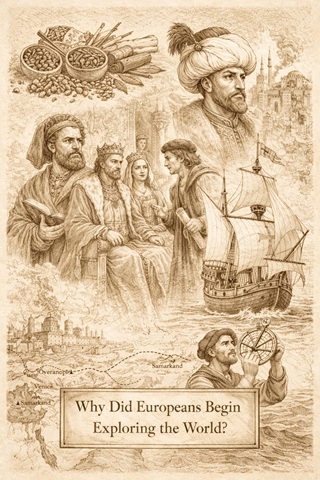
Montage of the major figures and factors related to the Age of European exploration.

Why Did Europeans Begin Exploring the World? During the late Middle Ages and the early years of the Renaissance, something remarkable began to happen in Europe. Sailors, merchants, and kings started sending ships far beyond the familiar waters of the Mediterranean Sea. These explorers crossed dangerous oceans, sailed along unknown coasts, and searched for new … Read more
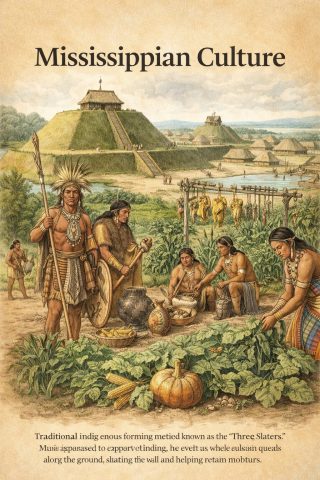
The Mississippian Civilization: Cities, Mounds, and Networks of Power in Pre-Columbian North America

Depiction of Mississippian civilization

When people think of great ancient civilizations, their minds often travel to places like Egypt, Greece, or the Maya cities of Central America. Far fewer realize that complex societies also flourished in North America long before Europeans arrived. One of the most impressive of these was the Mississippian civilization, a network of agricultural societies that … Read more

Indigenous Peoples of the Great Plains

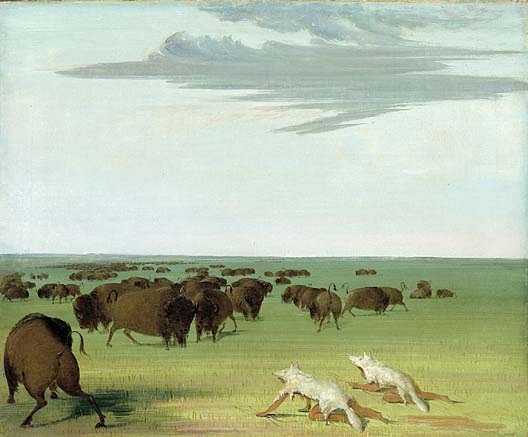
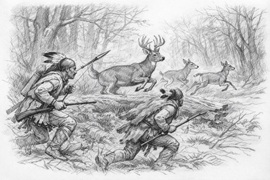
Buffalo and coyote-clad hunters on the great plains

Stretching across the center of North America is a vast region of open grassland known as the Great Plains. This enormous landscape begins in present-day Texas and extends northward through Oklahoma, Kansas, Nebraska, and the Dakotas, reaching into the Canadian prairies. At first glance, the Plains might seem empty. Trees are scarce in many places, … Read more

The Pre-Columbian Iroquois Confederation: A League of Nations in Indigenous North America

Long before Europeans arrived in North America, the continent was home to a rich variety of cultures, languages, and political systems. Among the most remarkable of these societies was the Iroquois Confederation, a powerful alliance of Native nations that emerged in the woodlands of what is now the northeastern United States and southeastern Canada. Known … Read more

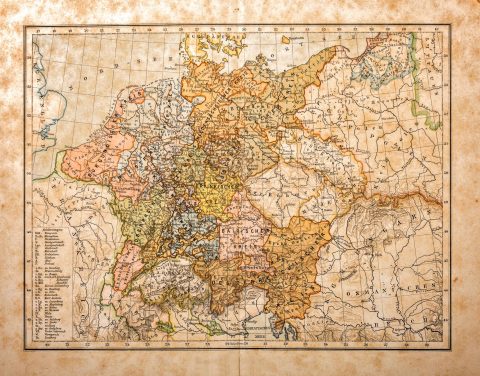
A Narrative Timeline of the Thirty Years’ War (1618–1648)

1618: A Window Opens, a Continent Slides Toward War The war begins not with armies, but with an argument over rights. In Prague, Protestant nobles fear that the Catholic Habsburg ruler of Bohemia intends to roll back the religious freedoms guaranteed to them. Their response is dramatic and symbolic: two imperial officials are thrown from … Read more

From Trench Coats to Tuxedos: How Cold War Espionage Remade Entertainment Media

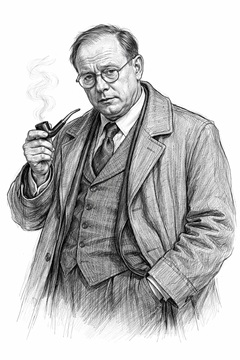
Pencil drawing of George Smiley

Never officially declared, never formally fought, and yet the Cold War may have been the most culturally productive conflict in modern history. No trenches. No mass mobilization. Instead, secrets. Files. Dead drops. Whispered betrayals in cafés and bureaucratic offices. And from those shadows emerged one of the most enduring bodies of entertainment ever produced. Espionage … Read more

Paul Revere and the World He Lived In: History Beyond the Midnight Ride

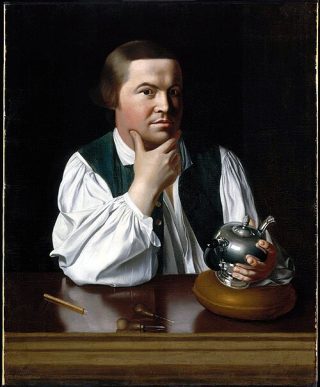
Portrait of Paul Revere

A review of a classic history text and its author, Esther Forbes Few figures in American history are as instantly recognizable—and as poorly understood—as Paul Revere. Reduced in popular memory to a single dramatic night, he often appears less as a historical person than as a patriotic symbol. Esther Forbes’s Paul Revere and the World … Read more

Seven Classics in History We Should Read Before We Die

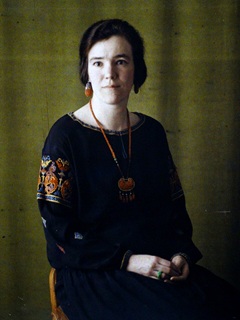
British economic historian Eileen Power

History is not merely a record of dates, battles, and political transitions. At its best, it is a conversation across generations—a way of entering the minds of people who lived in radically different circumstances yet wrestled with questions that remain deeply familiar. Why do societies rise and fall? What gives life meaning in the face … Read more