Slavery in Colonial America
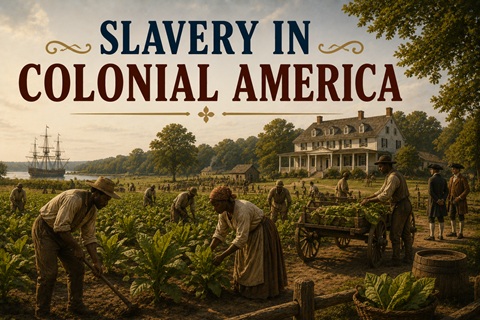
Slave market in Virginia

When we study colonial America, we learn about farming, trade, cities, and the growth of new settlements. But there is also a very important and difficult part of this history that must be understood: slavery. Slavery was a system in which people were treated as property and forced to work without pay or freedom. In … Read more

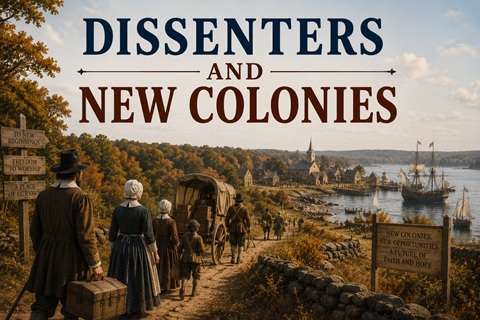
Dissenters and New Colonies

Colonial Rhode Island village by waterfront

Roger Williams, Anne Hutchinson, and the Founding of Rhode Island and Connecticut In the early days of the English colonies in North America, life was not always about freedom and opportunity in the way we often imagine today. Many of the settlers who came to places like Massachusetts were seeking religious freedom—but once they arrived, … Read more

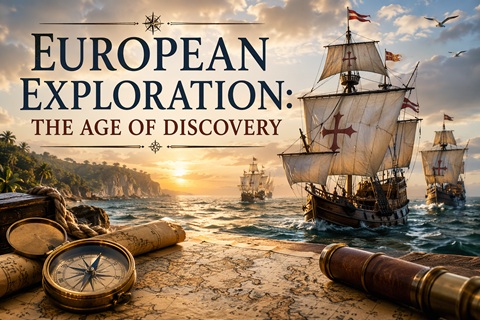
European Exploration: The Age of Discovery

European Exploration: The Age of Discovery

Why Did Europeans Begin Exploring the World? The Age of Discovery was a time, beginning in the late 1400s, when European countries sent explorers across oceans to find new trade routes, wealth, and knowledge. Advances in navigation, shipbuilding, and mapmaking made long-distance travel possible. Explorers like Christopher Columbus and Vasco da Gama helped connect continents … Read more

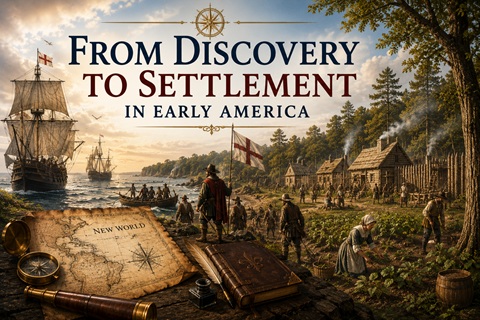
From Discovery to Settlement in Early America

Image illustrating the European nations competing for territory in the Americas

A Bridge from Discovery to Settlement When we study early American history, it is easy to jump straight into the story of colonies like Jamestown or Plymouth. But these settlements did not appear out of nowhere. They were the result of many years of exploration, trial and error, and learning from both success and failure. … Read more

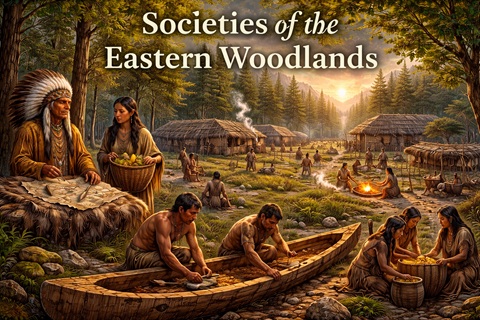
Societies of the Eastern Woodlands

Eastern Woodlands village at sunset

The Eastern Woodlands region of North America was home to many Indigenous societies that developed complex cultures adapted to forests, rivers, and seasonal changes. Stretching from the Atlantic Ocean to the Mississippi River, this region provided abundant natural resources that supported farming, hunting, and trade. In this lesson, students will explore how Eastern Woodlands peoples … Read more

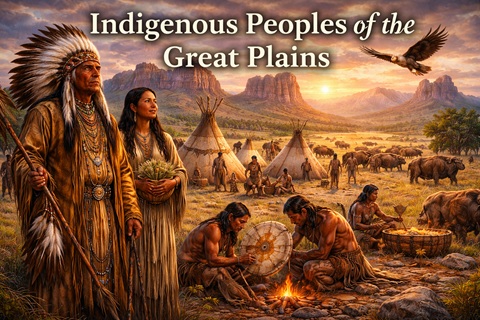
Indigenous Peoples of the Great Plains

Indigenous life on the Great Plains

The Great Plains region of North America is a vast area of grasslands stretching from the Mississippi River to the Rocky Mountains. Indigenous peoples of this region developed ways of life that were closely tied to the land, especially the movement of buffalo herds. Over time, these societies adapted to changing conditions, including the introduction … Read more

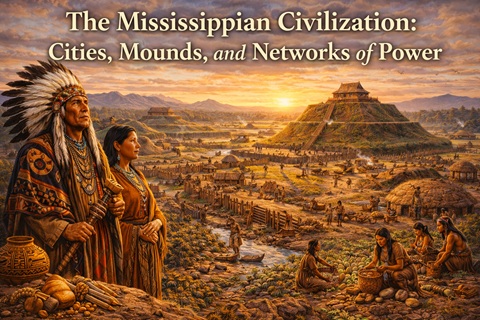
The Mississippian Civilization: Cities, Mounds, and Networks of Power in Pre-Columbian North America

Mississippian city at sunset

The Mississippian Civilization was one of the most advanced and organized societies in pre-Columbian North America. Flourishing between about 800 and 1600 CE, these societies built large cities, created massive earthen mounds, and developed extensive trade networks across the continent. Centered in the Mississippi River Valley, Mississippian peoples used agriculture—especially corn—to support growing populations and … Read more

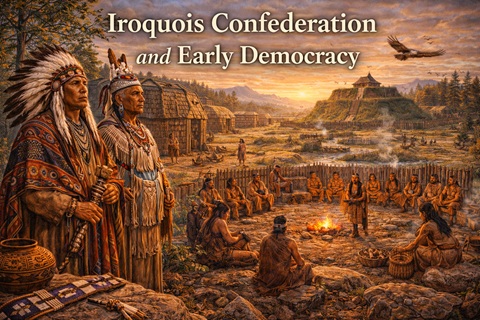
Iroquois Confederation and Early Democracy

Iroquois leaders at council gathering

Long before the formation of the United States, the Iroquois Confederation—also known as the Haudenosaunee, or “People of the Longhouse”—created a powerful alliance of nations in northeastern North America. This confederation brought together several groups under a shared system of governance that emphasized unity, peace, and cooperation. In this lesson, students will explore how the … Read more

1618: A Window Opens, a Continent Slides Toward War

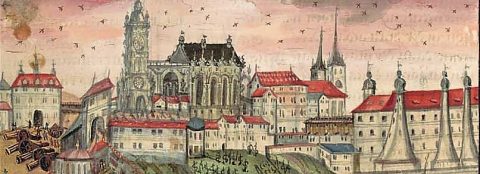
Prague castle

On a gray morning in May 1618, a small group of angry noblemen climbed the stairs of a castle in Prague. They were not generals, and they did not command armies. They carried no grand strategy for Europe, no vision of a continent remade by war. What they carried instead was a grievance—deep, specific, and … Read more