Overview
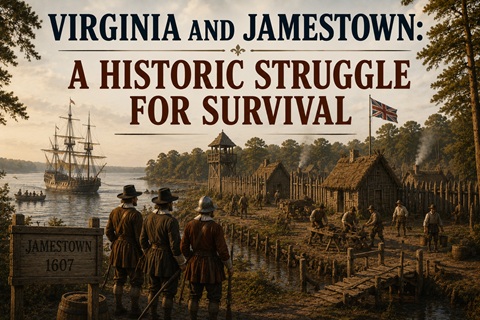
In 1607, English settlers established Jamestown in Virginia, creating the first permanent English settlement in North America. The colony was founded by the Virginia Company, which hoped to make a profit from resources found in the New World. However, the settlers soon faced disease, hunger, conflicts, and difficult environmental conditions. Despite these challenges, Jamestown survived and eventually prospered, becoming the foundation for England’s colonial efforts in North America. This lesson follows the lesson plan outline provided in the uploaded document.
What You Will Learn
- Explain why Jamestown was founded and what the settlers hoped to achieve.
- Describe the challenges the colonists faced during the early years of the settlement.
- Understand how Jamestown survived and became a successful colony.
The Founding of Jamestown
In the early 1600s, England wanted to compete with other European nations that had established colonies in the Americas. The Virginia Company received permission from King James I to create a settlement in North America. In 1607, about 100 settlers arrived and founded Jamestown along the James River in present-day Virginia.
Many of the settlers hoped to find gold and other valuable resources that would bring wealth to England and themselves. They chose a location that offered protection from possible attacks by European rivals and easy access for ships. However, the site also had serious disadvantages, including swampy land, polluted water, and large numbers of mosquitoes. These conditions would contribute to many of the colony’s early problems.
The Early Struggles of the Colony
Life in Jamestown was extremely difficult during its first years. Many settlers were unprepared for the hard work required to build homes, grow food, and survive in a new environment. Disease spread quickly, and food shortages became common. Relationships with the nearby Powhatan Confederacy were sometimes cooperative but also marked by periods of conflict and misunderstanding.
The colony’s worst period came during the winter of 1609–1610, an event known as the “Starving Time.” Food supplies ran dangerously low, and many colonists died from hunger and disease. Of the hundreds of settlers living in Jamestown before the winter, only a small number survived until spring. The colony came close to being abandoned altogether.
Survival and Growth in Virginia
Several factors helped Jamestown survive. Leadership from figures such as Captain John Smith encouraged settlers to work and contribute to the colony’s success. Smith promoted the idea that those who did not work should not eat, helping improve productivity during difficult times. Continued supplies and new settlers from England also helped the colony recover.
Jamestown’s future became more secure when colonist John Rolfe successfully grew a variety of tobacco that became popular in Europe. Tobacco quickly became Virginia’s most important cash crop and brought wealth to many settlers. As tobacco production expanded, the colony grew in population and economic importance. By surviving its early hardships, Jamestown established a lasting English presence in North America.
Conclusion
Jamestown’s history is a story of determination, hardship, and survival. Founded in 1607 as England’s first permanent colony in North America, the settlement faced disease, hunger, and conflict during its early years. Through strong leadership, assistance from new arrivals, and the success of tobacco farming, Jamestown endured and became the foundation of Virginia and future English colonies in America.
Key Terms
- Virginia Company – The English company that organized and financed the settlement of Jamestown.
- Cash Crop – A crop grown primarily to be sold for profit rather than for personal use.
Review Questions
- Why did the Virginia Company establish Jamestown in 1607?
- What challenges did the settlers face during the colony’s early years?
- How did tobacco help transform Jamestown into a successful colony?
Extension Activity
Jamestown Survival Strategy Project
Objective
Develop a survival plan that could have helped the early settlers of Jamestown overcome the challenges they faced during the colony’s first years.
Instructions
- Research the environmental conditions and difficulties faced by the Jamestown settlers.
- Identify at least five major challenges, such as disease, food shortages, or conflicts.
- Create a written survival plan explaining how you would address each challenge.
- Include maps, diagrams, or illustrations showing how the settlement could be organized more effectively.
- Explain which resources the colonists should prioritize and why.
- Conclude with a reflection describing whether your plan would have improved Jamestown’s chances of success and support your answer with historical evidence.
From Indigenous North America to European Colonization
Indigenous North America Before 1500
The European Age of Exploration
From Revolution to the Eve of Civil War
The Early Republic
The Jacksonian Era
Westward Expansion
The Late 19th Century
The American Civil War
Reconstruction
The Gilded Age
The Early 20th Century
The Progressive Era
World War I
The Roaring 20s and the Great Depression
Modern America Emerges
World War II
The Cold War
Post Cold War America
Modern America