Overview
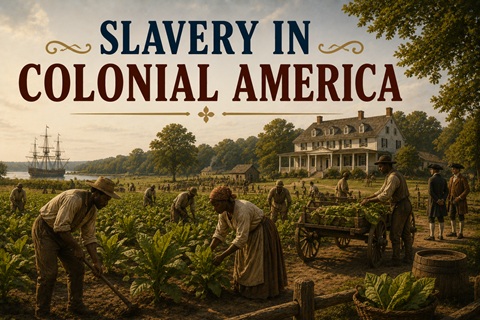
Slavery became an important part of Colonial America, especially in the Southern Colonies, where large farms and plantations depended on labor to grow profitable crops. Beginning in the early 1600s, enslaved Africans were brought to North America and forced to work without pay or freedom. Over time, colonial laws established a system of racial slavery that treated enslaved people as property. Understanding slavery in Colonial America is essential because it affected the lives of millions of people and had a lasting impact on American history. This lesson follows the lesson plan outline provided in the uploaded document.
What You Will Learn
- Explain how slavery developed in the English colonies.
- Describe the lives and experiences of enslaved people in Colonial America.
- Understand the impact of slavery on colonial society and the future United States.
The Development of Slavery in the Colonies
The first recorded Africans arrived in the English colony of Virginia in 1619. During the early colonial period, some Africans worked under conditions that were different from the permanent slavery that later developed. However, as the colonies grew and plantation agriculture expanded, colonial leaders increasingly turned to enslaved labor to meet the demand for workers.
By the late 1600s and early 1700s, colonial governments had passed laws that established slavery as a permanent condition inherited from one generation to the next. Enslaved Africans and their descendants were denied basic rights and freedoms. Plantation owners relied heavily on enslaved labor to produce crops such as tobacco, rice, and indigo, which generated significant profits for the colonial economy.
The Lives of Enslaved People
Enslaved people worked in many different settings, including plantations, farms, ports, workshops, and households. Their daily lives often involved long hours of labor under difficult conditions. Families could be separated through sale, and enslaved people had little control over their own lives. Despite these hardships, many worked to preserve their families, cultures, and traditions.
Enslaved Africans brought with them knowledge, skills, languages, music, religious beliefs, and cultural practices that influenced colonial society. They found ways to resist slavery through acts of perseverance, maintaining community ties, preserving traditions, slowing work, escaping when possible, and seeking opportunities to protect their families and dignity. Their resilience helped sustain communities despite the hardships they faced.
The Impact of Slavery on Colonial Society
Slavery played a major role in the economic growth of many colonies, particularly in the South. The labor of enslaved people helped produce valuable cash crops that were sold throughout the Atlantic world. As plantation agriculture expanded, slavery became deeply connected to the colonial economy and social structure.
At the same time, slavery created a society marked by inequality and injustice. Colonial laws enforced racial divisions and denied freedom to millions of people. The consequences of slavery continued long after the colonial period and influenced the development of the United States for centuries. Studying slavery helps us better understand both the achievements and the challenges of America’s past.
Conclusion
Slavery was a significant and tragic part of Colonial America. It developed into a system that deprived millions of Africans and their descendants of freedom while providing labor that supported colonial economic growth. Although enslaved people faced immense hardships, they preserved their cultures, built communities, and demonstrated remarkable resilience. Understanding slavery is essential to understanding the history of Colonial America and the United States.
Key Terms
- Enslaved Person – A person who is forced to work without freedom and is treated as the property of another person.
- Plantation – A large farm that grows cash crops for sale and often relied on enslaved labor during the colonial period.
Review Questions
- How did slavery develop and become established in the English colonies?
- What challenges did enslaved people face in Colonial America?
- How did slavery affect the economy and society of the colonies?
Extension Activity
Voices of Colonial America Research Project
Objective
Examine the experiences of enslaved people in Colonial America and understand how slavery affected individuals, families, and communities.
Instructions
- Research the life of an enslaved person or an enslaved community in Colonial America.
- Gather information from at least three reliable historical sources.
- Create a presentation, poster, or report explaining daily life, work, family relationships, and cultural traditions.
- Include maps, illustrations, or primary source excerpts that help tell the story.
- Explain how enslaved people preserved their culture and responded to the challenges they faced.
- Conclude with a reflection discussing why it is important to study slavery as part of American history and what lessons can be learned from these historical experiences.
From Indigenous North America to European Colonization
Indigenous North America Before 1500
The European Age of Exploration
From Revolution to the Eve of Civil War
The Early Republic
The Jacksonian Era
Westward Expansion
The Late 19th Century
The American Civil War
Reconstruction
The Gilded Age
The Early 20th Century
The Progressive Era
World War I
The Roaring 20s and the Great Depression
Modern America Emerges
World War II
The Cold War
Post Cold War America
Modern America