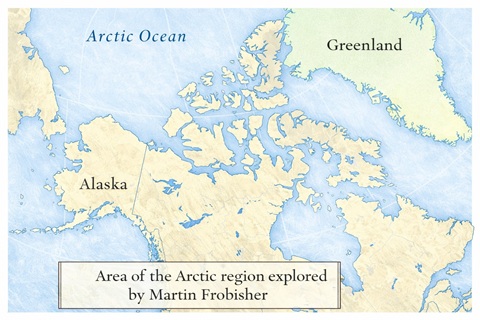
In the 1500s, European explorers were filled with a powerful idea: somewhere in the far north of North America, there might be a secret water route that led all the way to Asia. This imagined route was called the Northwest Passage. If it existed, ships from Europe could sail west across the Atlantic, pass through North America, and arrive in Asia much faster than by sailing around Africa.
The search for this passage became one of the great challenges of the Age of Exploration. Many explorers tried—and failed—to find it. One of the most determined among them was Martin Frobisher. His journeys into the icy waters of the Arctic were dangerous, mysterious, and important. Even though he never found the Northwest Passage, his expeditions helped England learn more about the northern parts of North America and strengthened its role in exploration.
Let’s explore who Martin Frobisher was, what he was searching for, and why his voyages into the Arctic still matter today.
The Dream of a Northwest Passage
To understand Frobisher’s story, we first need to understand the idea of the Northwest Passage.
In the 1500s, European countries were desperate to reach Asia. Goods from Asia—like spices, silk, and porcelain—were extremely valuable. But getting them was difficult. Traders had to travel long land routes or sail around the southern tip of Africa, which was controlled by Portugal.
Spain had already found a western route across the Atlantic, but their explorations were mostly in Central and South America. England wanted its own route—one that would not depend on Spanish or Portuguese control.
This led to the idea of a northern route: a passage through or around North America that would connect the Atlantic Ocean to the Pacific Ocean. If such a route existed, it could make England rich and powerful.
The problem? No one knew if the passage was real.
Maps of the time were often incomplete or incorrect. Some showed wide openings in North America that didn’t actually exist. Others suggested that the northern seas might be free of ice. Explorers had to rely on guesswork, hope, and courage.
Who Was Martin Frobisher?
Martin Frobisher was born around 1535 in England. From a young age, he was drawn to the sea. He became a sailor, learning navigation, ship handling, and the skills needed for long voyages.
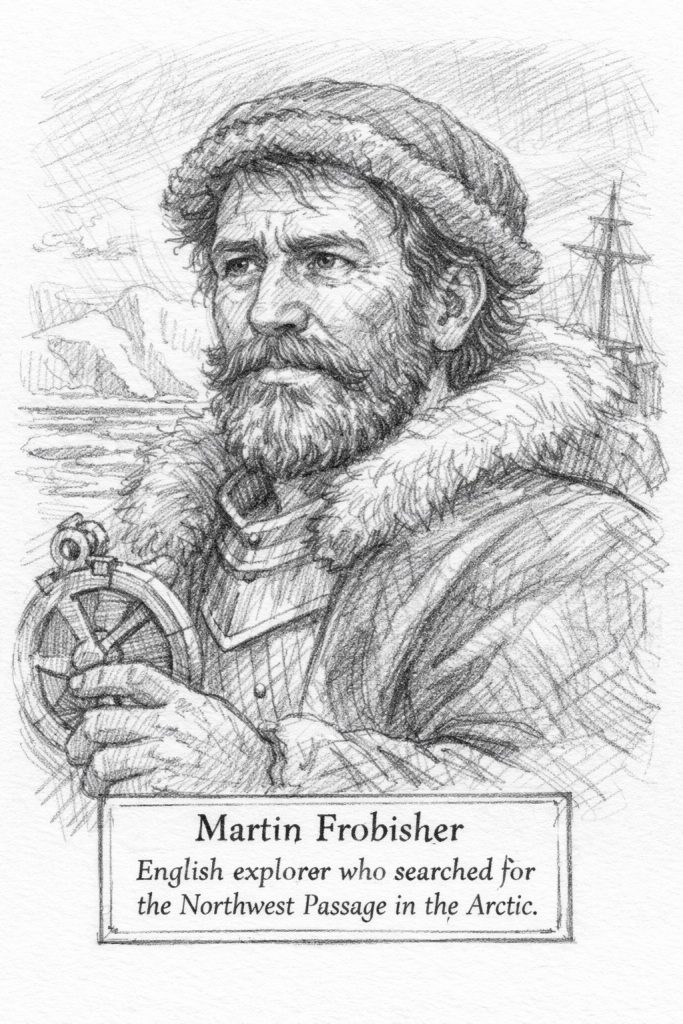
Before his Arctic expeditions, Frobisher had a rough and adventurous life. He was involved in trade, privateering (a kind of legal piracy), and various sea voyages. These experiences made him tough, bold, and willing to take risks.
But Frobisher wanted more than adventure—he wanted fame and success. He believed that finding the Northwest Passage would bring him both.
For many years, he tried to convince wealthy investors and the English government to support his plan. At first, he was unsuccessful. People were unsure if the passage existed, and the Arctic was known to be dangerous.
Finally, in the 1570s, Frobisher gained the support he needed. With backing from investors and permission from Queen Elizabeth I, he was ready to begin his search.
The First Voyage (1576)
In 1576, Frobisher set sail on his first expedition. He had three small ships and a crew of about 35 men. Compared to later expeditions, this was a modest journey—but it was still a bold step into the unknown.
As the ships sailed north across the Atlantic, the weather grew colder and harsher. The crew faced storms, fog, and icy waters. One ship was lost along the way, and another turned back. Only Frobisher’s main ship continued.
Eventually, Frobisher reached the coast of what is now Canada. He entered a large body of water that he believed might be the long-sought Northwest Passage. Today, this area is known as Frobisher Bay, located on Baffin Island.
Frobisher thought he had found a route leading west toward Asia. In reality, he had discovered a bay—not a passage—but at the time, it seemed like a major breakthrough.
During this voyage, Frobisher and his crew also encountered Indigenous peoples of the Arctic, likely Inuit. These meetings were tense and sometimes hostile, showing how difficult and dangerous these encounters could be.
Before returning to England, one of Frobisher’s men collected a strange black rock from the land. This rock would soon become very important.
The “Gold” That Wasn’t Gold
When Frobisher returned to England, he brought the black rock with him. Some people believed it might contain gold. After testing, it seemed to show signs of precious metal.
This discovery caused great excitement. Suddenly, Frobisher’s expedition was not just about finding a passage—it might also lead to wealth.
Investors became eager to support another voyage. If the Arctic lands contained gold, England could benefit greatly.
With this new motivation, plans were made for a second expedition.
The Second Voyage (1577)
In 1577, Frobisher returned to the Arctic with a larger fleet of ships. This time, the goal was not only to search for the Northwest Passage but also to collect more of the “gold-bearing” rock.
The expedition reached the same area as before. Frobisher and his crew spent time gathering large amounts of the black rock and loading it onto their ships.
Again, they explored the region, but their focus had shifted. Instead of carefully searching for a passage, they were more interested in collecting what they believed was gold.
When they returned to England, they brought back hundreds of tons of the rock. The excitement grew even stronger.
The Third Voyage (1578)
In 1578, Frobisher led his third and largest expedition. This time, he had a fleet of about 15 ships and over 400 men. The plan was ambitious: establish a colony in the Arctic and continue mining the supposed gold.
This was a major step. Instead of just exploring, England was attempting to settle in the harsh Arctic environment.
However, the voyage faced serious challenges. Ice blocked the ships’ paths, storms scattered the fleet, and the conditions were extremely difficult.
Frobisher never reached the exact location he had planned for the colony. Instead, the expedition struggled to survive in the freezing environment.
Despite these difficulties, the crews continued to gather more of the black rock. In the end, they returned to England with even larger amounts of it.
The Truth About the Rock
Back in England, experts carefully studied the rock that Frobisher had brought back.
At first, there had been hope that it contained gold. But after further testing, the truth became clear: the rock was nearly worthless.
It did not contain gold. It was simply a type of mineral that looked promising but had no real value.
This was a huge disappointment. The excitement faded quickly, and investors lost interest. Frobisher’s Arctic ventures came to an end.
Why Didn’t Frobisher Find the Northwest Passage?
Frobisher was brave and determined, but he did not find the Northwest Passage. There are several reasons why.
1. The Passage Is Extremely Difficult
The Northwest Passage does exist, but it is not easy to navigate. It winds through narrow channels in the Arctic, often blocked by ice.
Even today, with modern ships and technology, it can be dangerous.
2. Limited Knowledge and Tools
Frobisher and his crew did not have accurate maps or advanced navigation tools. They had to rely on guesswork and incomplete information.
3. Harsh Arctic Conditions
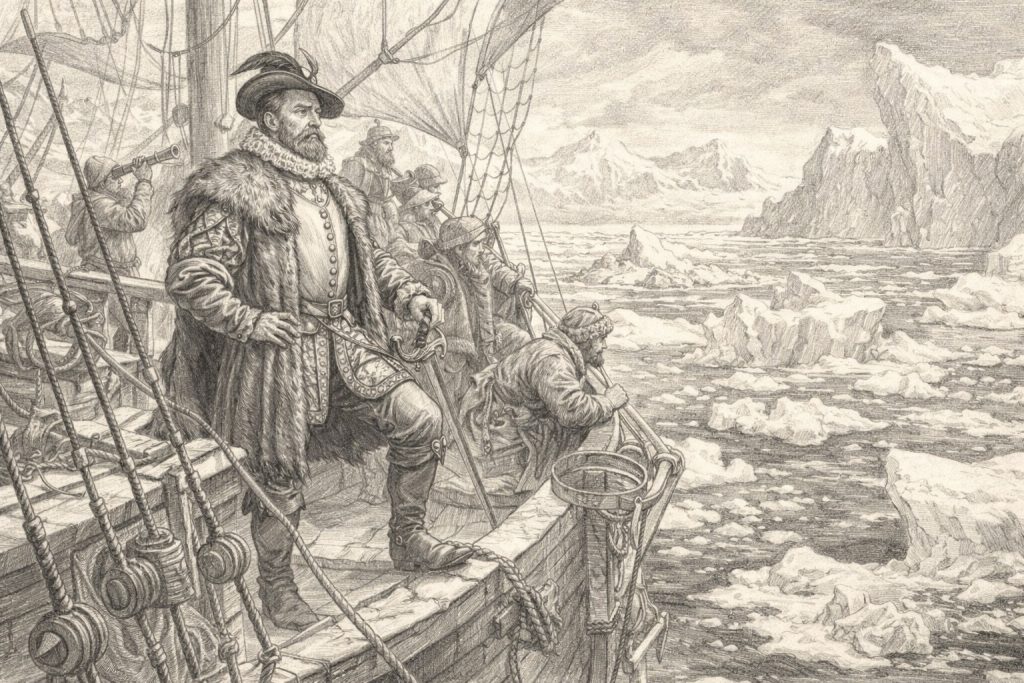
The Arctic is one of the most challenging environments on Earth. Freezing temperatures, ice, storms, and long periods of darkness made exploration extremely difficult.
What Did Frobisher Achieve?
Even though he did not find the Northwest Passage or discover gold, Frobisher’s voyages were still important.
1. Exploration of the Arctic
Frobisher was one of the first English explorers to travel deep into the Arctic. He helped map parts of northern Canada and increased knowledge of the region.
2. Strengthening England’s Role
His expeditions showed that England was serious about exploration. This helped the country compete with Spain and Portugal.
3. Lessons Learned
Frobisher’s voyages taught future explorers about the dangers of the Arctic and the importance of careful planning.
The Legacy of Arctic Exploration
Frobisher was not the only explorer searching for the Northwest Passage. Many others would try in the years that followed.
Some, like Henry Hudson, would also explore the northern regions of North America. Others would face even greater hardships.
The search for the Northwest Passage continued for centuries. It was not fully navigated until much later, when explorers had better tools and knowledge.
Today, the Northwest Passage is still difficult to travel, but it is becoming more accessible due to changes in climate.
Understanding the Bigger Picture
Frobisher’s story is part of a larger pattern in history. Exploration was driven by a mix of curiosity, competition, and the desire for wealth.
But it is also important to remember that these journeys affected the Indigenous peoples who already lived in these regions. Encounters between Europeans and Indigenous groups were often complicated and sometimes harmful.
By studying these stories, we can better understand both the achievements and the consequences of exploration.
Conclusion
Martin Frobisher’s search for the Northwest Passage is a story of ambition, courage, and challenge. He sailed into the icy waters of the Arctic, hoping to find a route to Asia that would bring wealth and power to England.
Although he did not find the passage or discover gold, his voyages expanded knowledge of the Arctic and helped pave the way for future explorers.
Frobisher’s story reminds us that exploration is not always about success. Sometimes, even failed journeys can teach important lessons and shape the course of history.
In the end, his expeditions stand as a powerful example of human determination—the desire to explore the unknown, no matter how difficult the journey might be.
