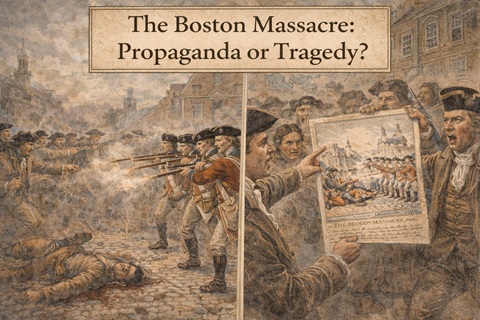
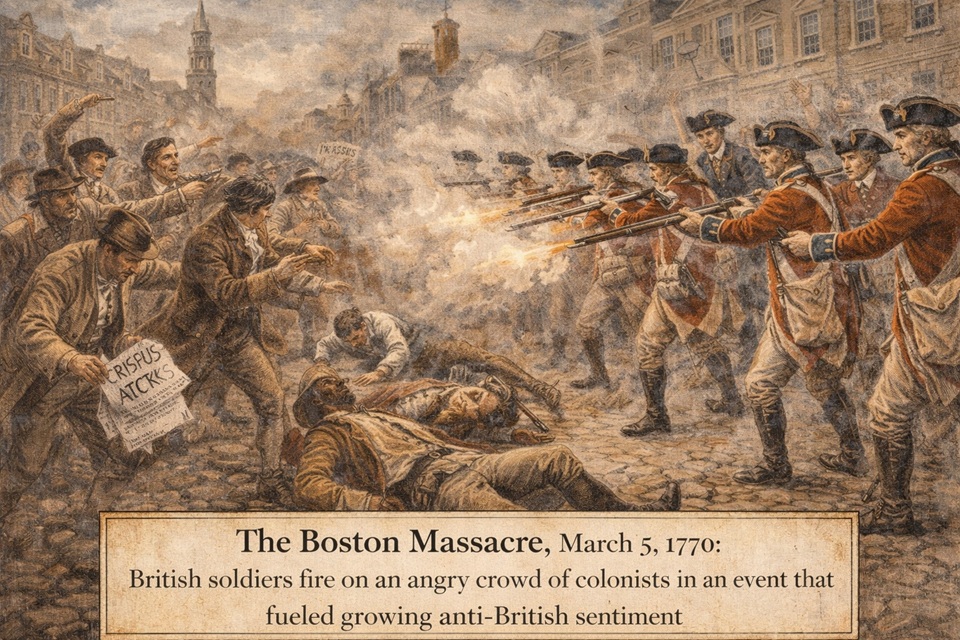
On a cold night in March 1770, something happened in the city of Boston that would change the course of American history. A crowd gathered. Angry words were shouted. Snowballs—and maybe more—were thrown. Then suddenly, British soldiers fired their weapons.
When the smoke cleared, five colonists were dead.
This event became known as the Boston Massacre. But what exactly happened that night? Was it a brutal attack on innocent people, as many colonists claimed? Or was it a chaotic situation that got out of control?
In this essay, we will explore both sides of the story and ask an important question:
Was the Boston Massacre mainly propaganda—or was it a true tragedy?
1. Setting the Scene: Tension in Boston
To understand the Boston Massacre, we first need to understand what life was like in Boston at the time.
Why was Boston so tense?
By 1770, colonists were already angry about British policies, especially taxes like:
- The Stamp Act
- The Townshend Acts
These taxes made many colonists feel:
- Unfairly treated
- Ignored by the British government
- Disrespected as citizens
British soldiers in the city
To maintain order, Britain sent soldiers (often called “Redcoats”) to Boston.
But instead of calming things down, this made tensions worse.
Colonists felt:
- Watched
- Controlled
- Threatened
At the same time, soldiers:
- Had to deal with angry crowds
- Were often insulted or harassed
Boston had become a place where conflict could break out at any moment.
2. March 5, 1770: What Happened That Night?
Let’s take a closer look at the events of the Boston Massacre.
The beginning
It started with a small conflict:
- A British soldier was standing guard outside a building
- A colonist began arguing with him
- A crowd started to gather
As more people arrived:
- The crowd grew larger
- The situation became louder and more aggressive
The crowd’s actions
Many colonists in the crowd:
- Shouted insults at the soldiers
- Threw snowballs, ice, and possibly rocks
- Dared the soldiers to fire
Some reportedly yelled:
“Fire if you dare!”
The soldiers’ reaction
More British soldiers arrived to support the guard.
They:
- Formed a line
- Held their muskets
- Faced the growing crowd
Then, in the confusion:
- A shot was fired
- Then more shots followed
The result
When the shooting stopped:
- Five colonists were dead
- Several others were injured
One of the most well-known victims was Crispus Attucks, a man of African and Native American descent, often remembered as the first person killed in the incident.
3. Why It Was Called a “Massacre”
Almost immediately, colonial leaders began calling the event a “massacre.”
Why use that word?
The term “massacre” suggests:
- A planned, brutal killing
- Victims who are mostly innocent
- Attackers who act without reason
By using this word, colonists were sending a strong message:
British soldiers had murdered innocent people.
4. The Role of Propaganda
This is where the idea of propaganda becomes important.
What is propaganda?
Propaganda is:
- Information designed to influence how people think
- Often one-sided
- Sometimes exaggerated or misleading
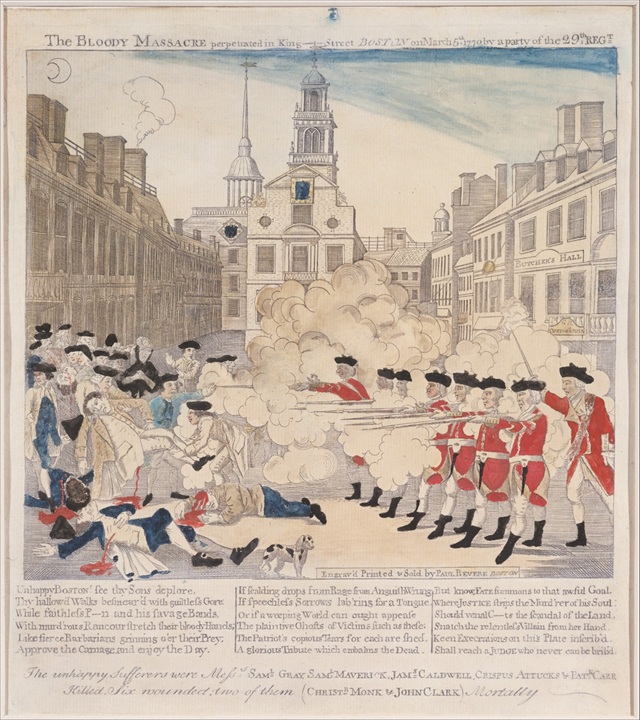
Paul Revere’s famous engraving
One of the most powerful examples of propaganda came from Paul Revere, a Boston silversmith and patriot.
He created an engraving (a kind of printed image) that showed:
- British soldiers standing in a neat line
- Calmly firing into a peaceful crowd
- Colonists appearing defenseless
What’s misleading about this image?
The engraving:
- Made the soldiers look organized and intentional
- Left out the chaos of the crowd
- Did not show colonists throwing objects or provoking the soldiers
In other words, it told a very specific version of the story.
5. The Power of Words and Images
Colonial leaders used both:
- Words (newspapers, speeches, pamphlets)
- Images (like Revere’s engraving)
to shape public opinion.
Their goal:
- Turn colonists against Britain
- Unite people in opposition
- Build support for resistance
And it worked.
6. The Trial: Another Side of the Story
After the Boston Massacre, something surprising happened.
The British soldiers were put on trial.
Who defended them?
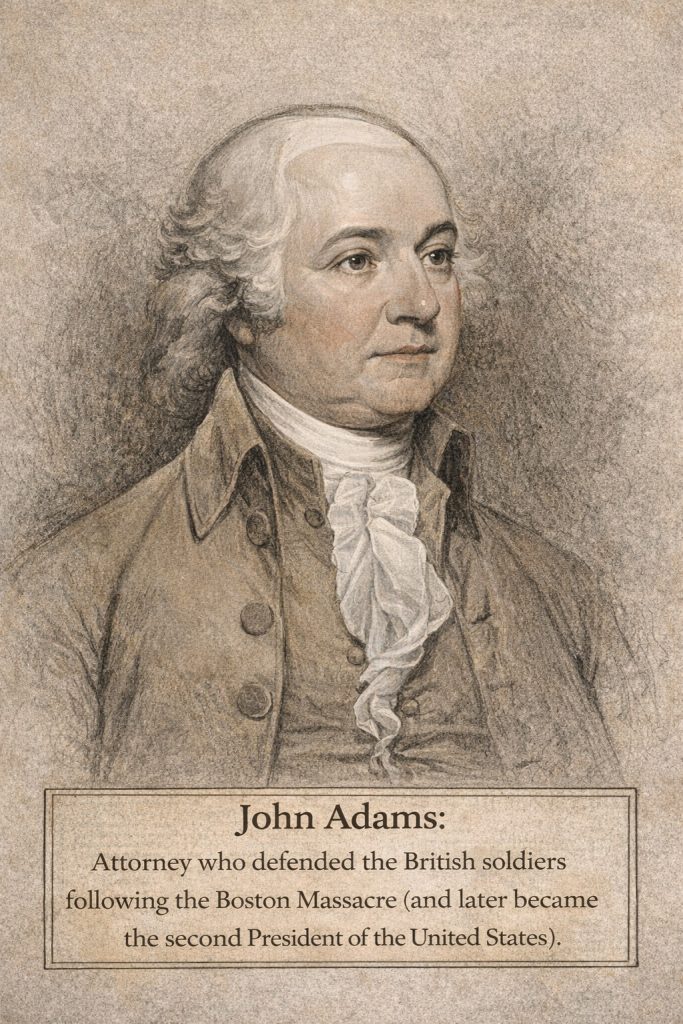
A colonial lawyer named John Adams—who would later become the second President of the United States.
Why did Adams defend them?
He believed:
- Everyone deserves a fair trial
- Justice should be based on facts, not emotion
What did the defense argue?
Adams argued that:
- The soldiers were provoked
- They were being attacked by the crowd
- They acted in self-defense
The outcome
- Most of the soldiers were found not guilty
- Two were found guilty of a lesser charge (manslaughter)
7. What This Tells Us
The trial shows that:
- The situation was more complicated than it first appeared
- Not everyone believed the soldiers were entirely at fault
- Even colonists recognized the importance of fairness
8. Was It a Tragedy?
Even if the event was complicated, it was still a tragedy.
Why?
- People lost their lives
- Families lost loved ones
- Fear and anger increased
The event showed how dangerous the situation had become.
9. Fear on Both Sides
It’s important to understand that both sides felt threatened.
Colonists felt:
- Oppressed by British control
- Angry about taxes
- Suspicious of soldiers
Soldiers felt:
- Surrounded by hostile crowds
- Outnumbered
- Under attack
This mutual fear made conflict more likely.
10. A Turning Point in Colonial Opinion
After the Boston Massacre, many colonists began to think differently.
Before:
- Some still hoped for peace with Britain
After:
- More people began to distrust British authority
- Resistance grew stronger
The event didn’t cause the Revolution immediately—but it pushed things in that direction.
11. Propaganda vs. Reality
So, was the Boston Massacre propaganda?
Yes—in some ways:
- Colonial leaders used the event to influence opinion
- Images and stories were sometimes exaggerated
- The word “massacre” shaped how people understood it
But it was also real:
- People really were killed
- Violence really did happen
- Tensions were genuinely high
12. Why Both Can Be True
The Boston Massacre can be both:
- A tragedy (because lives were lost)
- A propaganda tool (because it was used to influence people)
These two ideas don’t cancel each other out—they work together.
13. Lessons from the Boston Massacre
This event teaches us several important lessons:
1. Events can be interpreted in different ways
Different people can see the same event differently.
2. Words matter
Calling something a “massacre” changes how people feel about it.
3. Images are powerful
Pictures can shape opinions just as much as facts.
4. Emotions can influence decisions
Fear and anger can lead to actions people might not otherwise take.
14. Why It Still Matters Today
Even today, the Boston Massacre reminds us to:
- Think carefully about what we hear and see
- Ask questions about different perspectives
- Look for evidence before forming conclusions
15. A Final Answer
So, was the Boston Massacre propaganda or tragedy?
The best answer is:
It was both.
- It was a tragedy because real people died in a moment of chaos and fear
- It became propaganda because leaders used it to unite colonists and turn them against Britain
Together, these two aspects made the Boston Massacre one of the most important events leading up to the American Revolution.
Reflection Questions
- Why do you think colonial leaders used the word “massacre” to describe the event?
- How did propaganda influence how people understood the Boston Massacre?
- Do you think the soldiers acted in self-defense, or were they to blame? Why?
- Can you think of a modern example where the same event is described differently by different groups?
