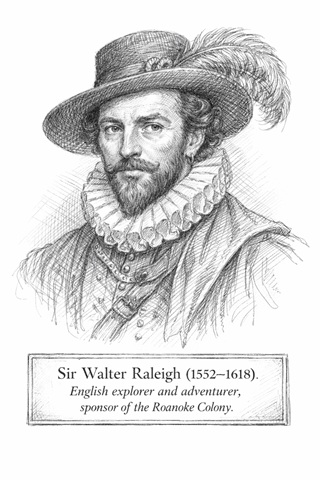
A Story of Exploration, Hope, and Mystery
In the late 1500s, England was just beginning to explore the wider world. Across the ocean lay lands that Europeans called the “New World,” a place full of unknown peoples, strange landscapes, and exciting opportunities. Among the most important figures in England’s early efforts to settle North America was Sir Walter Raleigh. His attempts to establish a colony led to one of the greatest mysteries in American history: the Lost Colony of Roanoke.
This story has everything—adventure, danger, bravery, and a mystery that has puzzled historians for over 400 years.
The Age of Exploration and England’s Ambitions
By the time Raleigh became involved in exploration, countries like Spain and Portugal had already built powerful empires in the Americas. England, however, was late to the game. Queen Elizabeth I wanted her country to compete. She hoped England could gain wealth, land, and influence by establishing colonies across the Atlantic.
Colonies could provide valuable resources such as timber, furs, and new crops. They could also serve as bases for ships and help England challenge Spanish power.
In 1584, Queen Elizabeth granted Raleigh permission to explore and settle land in North America. Raleigh himself never traveled there, but he organized expeditions and funded them.
Naming a New Land: Virginia
When Raleigh’s explorers reached the coast of North America, they claimed the land for England. In honor of Queen Elizabeth I—who was known as the “Virgin Queen” because she never married—they named the region Virginia.
This was not the Virginia we know today, but a much larger area that included much of the eastern coastline of North America.
The name symbolized loyalty to the queen and marked England’s first serious attempt to establish a presence in the New World.
Roanoke Island: A Promising Beginning
One of the first places the English chose to settle was Roanoke Island, located off the coast of what is now North Carolina.
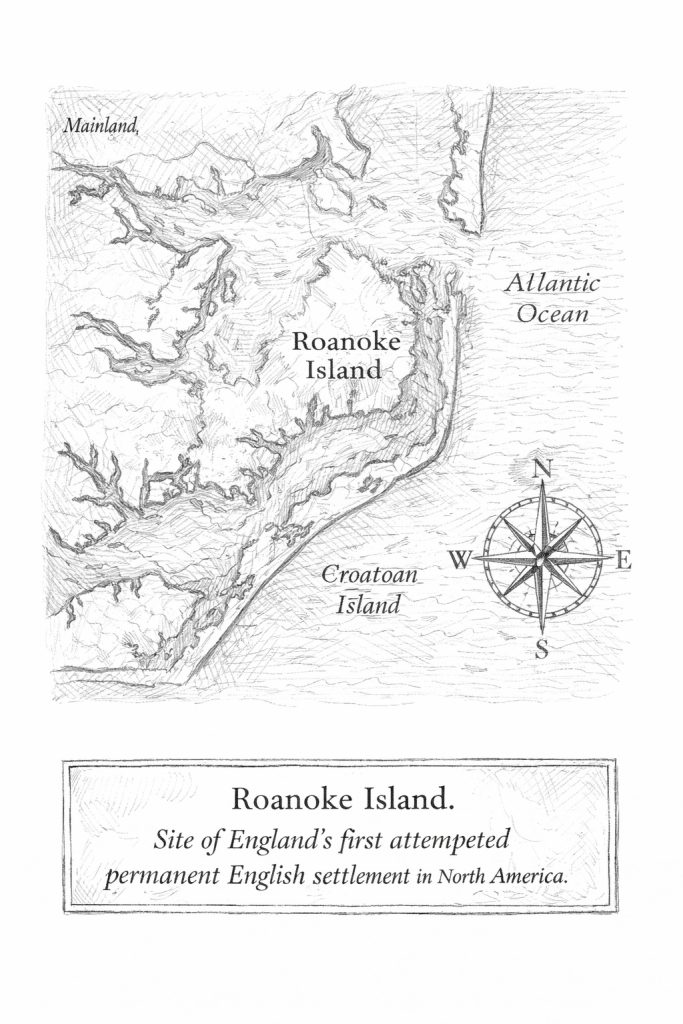
Roanoke Island seemed like a good choice for several reasons:
- It had access to the ocean and nearby rivers
- The land appeared fertile
- It was close to Native American communities, which might offer help
In 1585, Raleigh sent the first group of settlers to Roanoke. These men were mostly soldiers and explorers, not farmers. They struggled almost immediately.
Early Struggles at Roanoke
The first colony faced serious problems:
- Food shortages – The settlers were not prepared to grow their own food
- Harsh conditions – The environment was unfamiliar and difficult
- Tension with Native Americans – At first, relations were friendly, but misunderstandings led to conflict
One important Native American leader the English encountered was Wingina. Initially cooperative, he later became suspicious of the English.
By 1586, the situation had become so bad that the colonists decided to leave. They returned to England with the help of Sir Francis Drake.
A Second Attempt: Families Settle Roanoke
Raleigh was not ready to give up. In 1587, he sent a second group of settlers—this time including women and children. The goal was not just exploration, but building a permanent community.
This group was led by John White, an artist and mapmaker. He brought his daughter and his granddaughter, Virginia Dare.
Virginia Dare was born on Roanoke Island in August 1587. Her birth was an important moment—it showed that the English intended to stay.
Trouble Returns
Despite their hopes, the second colony faced many of the same problems:
- Lack of supplies
- Difficulty growing food
- Continued tension with Native American groups
The settlers depended heavily on supplies from England. Without regular shipments, they could not survive.
Because of this, the colonists convinced John White to return to England to gather more supplies.
John White’s Difficult Journey
White left Roanoke in late 1587, planning to return quickly. But events in Europe delayed him.
England was preparing for a major conflict with Spain, leading to the famous Spanish Armada. All available ships were needed for defense, and White could not secure a vessel to return to America.
As a result, three years passed before he could finally sail back.
The Disappearance of the Colony
In 1590, John White returned to Roanoke Island. What he found was shocking.
The colony was completely abandoned.
- No people
- No signs of struggle or battle
- Buildings had been taken apart
- Everything was quiet
The only clue was a word carved into a wooden post:
“CROATOAN”
On another tree, White found the letters “CRO.”
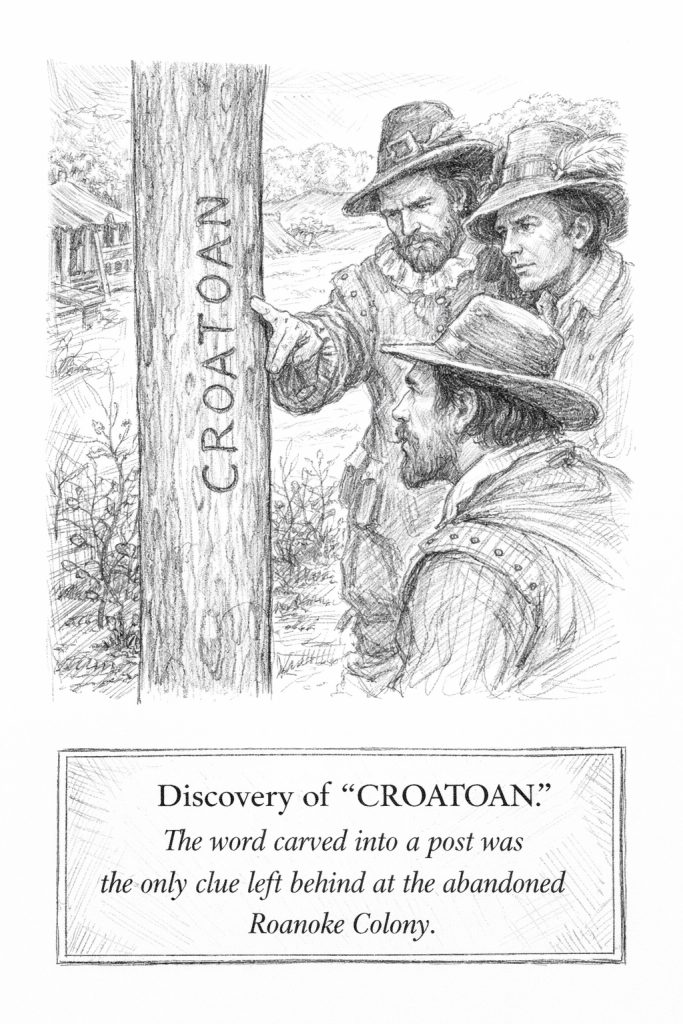
The Croatoan Clue
“Croatoan” was the name of a nearby island (today called Hatteras Island) and also the name of a Native American tribe that lived there.
Before White left, the colonists had agreed that if they moved, they would leave a message indicating where they had gone. If they were in danger, they would carve a cross.
There was no cross.
This suggested that the colonists had not left in fear, but had chosen to relocate.
What Happened to the Lost Colony?
To this day, no one knows for certain what happened to the Roanoke settlers. This is why it is called the Lost Colony.
However, historians have developed several possible explanations.
1. They Joined a Native American Tribe
Many experts believe the colonists may have joined the Croatoan people or another nearby tribe.
There is some evidence for this:
- Later reports described Native Americans with European features
- Some tribes used English-style tools and words
This theory suggests that the colonists adapted and became part of a new community.
2. They Moved Inland
Another idea is that the settlers moved inland in search of better farmland and resources.
They may have tried to settle along rivers or in areas with more food.
However, if they did this, something may have gone wrong later—disease, conflict, or starvation.
3. They Perished
It is also possible that the colonists did not survive.
They may have faced:
- Harsh winters
- Lack of food
- Illness
- Conflict with Native Americans
Without supplies or help from England, survival would have been extremely difficult.
4. A Combination of Factors
The most likely answer may be a combination of all these ideas.
Some colonists may have joined Native Americans, while others moved or perished.
History is often complicated, and not every mystery has a single clear answer.
Why the Mystery Still Matters
The story of Roanoke captures people’s imagination because it remains unsolved. Unlike many historical events, there is no final answer—only clues and theories.
It also teaches us important lessons:
- Colonization was difficult and dangerous
- Success required planning, cooperation, and resources
- Understanding and respecting other cultures was essential
The Roanoke colony failed, but it paved the way for future English settlements, such as Jamestown in 1607.
Sir Walter Raleigh’s Legacy
Although Raleigh’s colony did not succeed, his efforts were important.
He helped:
- Encourage English exploration
- Inspire future colonization
- Establish England’s interest in North America
Raleigh himself had a dramatic life. He was a soldier, writer, and explorer, but he later fell out of favor with the king and was eventually executed.
Even so, his name remains closely tied to the story of Roanoke and the beginnings of English America.
A Story That Lives On
The Lost Colony of Roanoke continues to fascinate students, historians, and storytellers.
It has inspired:
- Books and movies
- Plays and documentaries
- Ongoing archaeological research
People are still searching for answers today.
Conclusion: Mystery Across the Ocean
The story of Sir Walter Raleigh and the Lost Colony of Roanoke Island is one of the most intriguing chapters in early American history.
It began with hope—England’s dream of building a new world across the ocean. It included bravery, struggle, and determination. And it ended in mystery.
The carving of the word “CROATOAN” remains one of history’s greatest unanswered questions.
What happened to the settlers?
Did they survive and blend into a new culture?
Or did they vanish in the wilderness?
We may never know for certain. But that mystery is exactly what makes the story so unforgettable.
