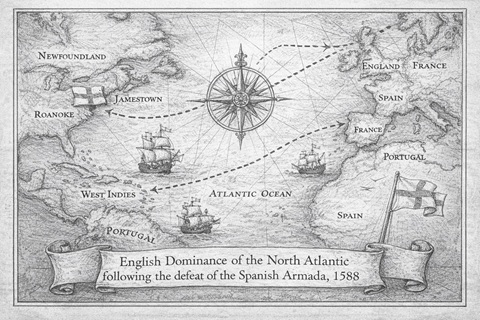
In the late 1400s and 1500s, European nations began exploring the world in ways they never had before. This time period is often called the Age of Exploration. Countries like Spain and Portugal were the first to send ships across the oceans, discovering new lands and building powerful empires. But England did not jump into exploration right away.
At first, England watched from the sidelines while Spain grew rich and powerful. Over time, however, England decided it could not stay out of the race. By the late 1500s, England had begun exploring, trading, and even challenging Spain for control of the seas.
Why did England finally enter the Age of Exploration?
The answer involves four important ideas:
- A growing rivalry with Spain
- A deep religious conflict between Protestants and Catholics
- A strong desire for trade and colonies
- The bold actions of English privateers
Together, these forces pushed England into becoming a major world power.
Watching Spain Grow Powerful
To understand England’s decision, we must first look at Spain.
In the early 1500s, Spain became the most powerful country in Europe. Spanish explorers—called conquistadors—had conquered large empires in the Americas. They discovered vast amounts of gold and silver and sent this wealth back to Spain.
As a result:
- Spain became incredibly rich
- It built a strong navy
- It gained influence across the world
England could not ignore this. Imagine watching a neighboring country suddenly become rich and powerful while your own country struggles to keep up. That is how England felt.
At first, England did not have the same resources or experience as Spain. But over time, English leaders began to ask an important question:
If Spain can do this, why can’t we?
Rivalry with Spain
One of the biggest reasons England entered the Age of Exploration was its growing rivalry with Spain.
Competing for Power
England and Spain both wanted to be strong and influential nations. But Spain’s success made England feel threatened. If Spain controlled the seas and the wealth of the Americas, it could dominate Europe as well.
England did not want to fall behind.
This rivalry led to competition in several areas:
- Control of trade routes
- Access to new lands
- Power on the seas
The Spanish Armada
The rivalry between England and Spain eventually led to open conflict. In 1588, Spain sent a massive fleet of ships called the Spanish Armada to invade England.
But England’s navy, along with bad weather, defeated the Armada.
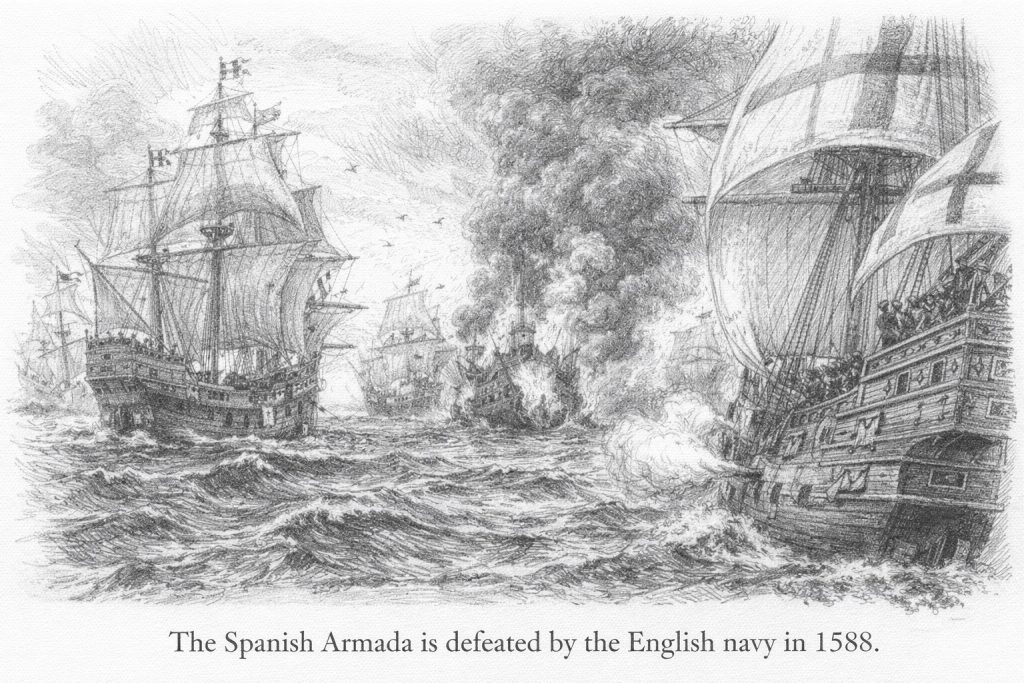
This victory was very important:
- It weakened Spain’s power
- It boosted England’s confidence
- It showed that England could compete on the world stage
After this moment, England became more active in exploration and colonization.
Protestant vs Catholic Conflict
Religion also played a major role in England’s entry into exploration.
The Reformation
In the 1500s, Europe was divided by religion. The Catholic Church had been the main religious authority for centuries, but a movement called the Reformation led to the rise of Protestant churches.
Spain remained strongly Catholic.
England, however, became Protestant during the reign of Queen Elizabeth I.
Religious Tensions
This religious difference created tension and conflict between England and Spain.
- Spain saw itself as the defender of Catholicism
- England supported Protestantism
These differences were not just about belief—they also affected politics and power.
Exploration as a Religious Mission
For some English people, exploration had a religious purpose. They believed they could:
- Spread Protestant ideas to new lands
- Challenge Catholic influence in the Americas
- Undermine Spain’s religious authority
This gave exploration a deeper meaning. It was not just about money—it was also about belief and identity.
Desire for Trade and Wealth
Another major reason England entered the Age of Exploration was the desire for trade.
The Importance of Trade
Trade was essential for wealth in the 1500s. Countries wanted access to valuable goods such as:
- Spices
- Silk
- Gold and silver
- Sugar and tobacco
Spain and Portugal had already established trade routes to the Americas and Asia. England wanted a share of this wealth.
Finding New Routes
English explorers searched for new ways to reach Asia. One idea was the Northwest Passage, a route through the Arctic that would connect the Atlantic and Pacific Oceans.
Although this route was difficult and often unsuccessful, it shows how determined England was to expand its trade.
Building Colonies
England also began to think about establishing its own colonies.
Colonies could:
- Provide raw materials
- Serve as bases for trade
- Expand England’s influence
Early attempts, such as the Roanoke colony, faced challenges. But they marked the beginning of England’s efforts to build an empire.
The Role of English Privateers
One of the most exciting parts of England’s entry into exploration involves the privateers.
What Is a Privateer?
A privateer was a sailor who was allowed by the government to attack enemy ships. Privateers were not exactly pirates—but they were very similar.
The key difference was that privateers had official permission from the crown.
Attacking Spanish Ships
English privateers often targeted Spanish ships carrying treasure from the Americas. These ships were filled with gold and silver.
By attacking them, privateers could:
- Steal valuable cargo
- Weaken Spain’s economy
- Bring wealth back to England
Famous Privateers
Some of the most famous English privateers include:
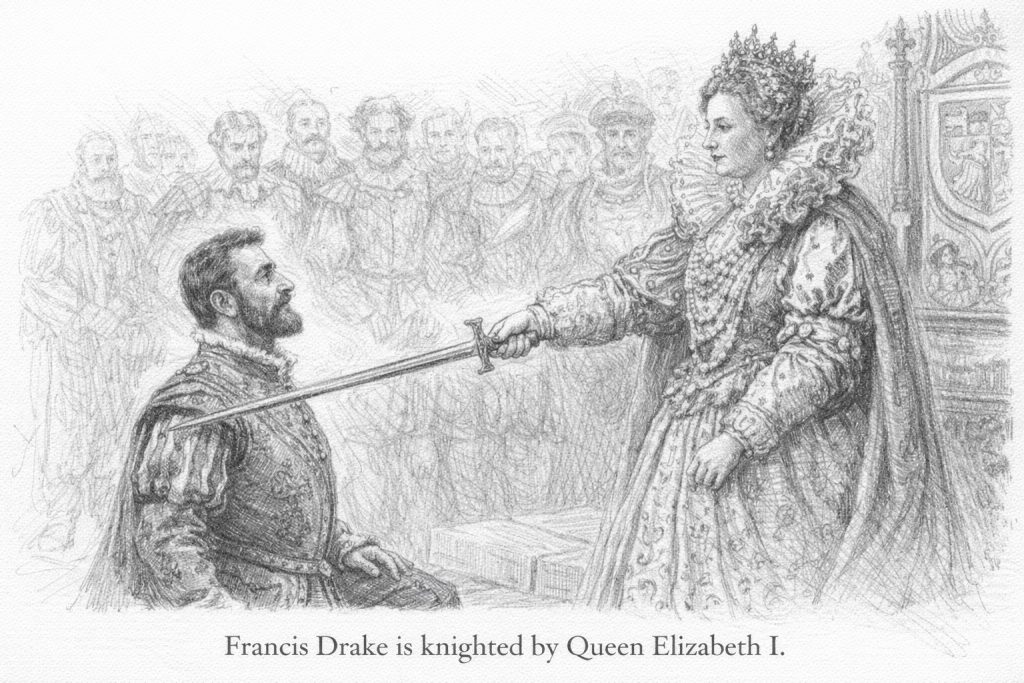
- Sir Francis Drake
- Sir John Hawkins
Francis Drake became especially famous for sailing around the world and raiding Spanish ships along the way.
Why Privateers Mattered
Privateers played an important role in England’s rise:
- They challenged Spain’s control of the seas
- They brought wealth to England
- They gained experience in long-distance sailing
In many ways, privateers helped prepare England for full-scale exploration and empire-building.
Queen Elizabeth I and Leadership
Strong leadership also helped England enter the Age of Exploration.
Queen Elizabeth I
Queen Elizabeth I ruled England from 1558 to 1603. She supported exploration and encouraged privateers.
Although she did not always openly declare war on Spain, she allowed privateers to attack Spanish ships. This gave England an advantage without always starting a full war.
Elizabeth also supported explorers who wanted to find new lands and trade routes.
Encouraging Exploration
Under Elizabeth’s leadership:
- Explorers received support and funding
- Privateers gained official backing
- England became more confident on the seas
Her reign is often seen as a turning point in England’s rise as a global power.
The Beginning of an English Empire
By the end of the 1500s, England had firmly entered the Age of Exploration.
Although it was not yet as powerful as Spain, England had taken important steps:
- Exploring new lands
- Challenging Spanish dominance
- Beginning to establish colonies
These efforts would grow in the 1600s and beyond, eventually leading to a large English empire.
Challenges and Failures
England’s path into exploration was not easy.
Failed Colonies of England
Some early colonies, like Roanoke, failed completely. Settlers faced:
- Harsh conditions
- Lack of supplies
- Conflict with Native Americans
These failures taught England important lessons about colonization.
Strong Competition
Spain remained a powerful rival. England had to compete with:
- Spanish wealth
- Spanish naval power
- Spanish experience
Despite these challenges, England continued to push forward.
Why England Entered the Age of Exploration
Looking back, we can see that several key factors worked together.
1. England’s Rivalry with Spain
England did not want Spain to dominate the world. Competition pushed England to explore and expand.
2. Religious Conflict
The divide between Protestant England and Catholic Spain added urgency and purpose to exploration.
3. Desire for Trade and Wealth
England wanted access to valuable goods and new markets. Exploration offered a way to gain wealth.
4. Privateers
Privateers helped England challenge Spain and gain experience on the seas.
5. Strong Leadership
Leaders like Queen Elizabeth I encouraged exploration and supported those who took risks.
Conclusion
England’s entry into the Age of Exploration was not a single event—it was the result of many different forces coming together.
At first, England watched as Spain built a powerful empire filled with wealth from the Americas. But over time, rivalry, religion, and the desire for trade pushed England to take action.
Privateers challenged Spanish ships, explorers searched for new routes, and leaders supported these efforts. Step by step, England became more involved in global exploration.
By the end of the 1500s, England was no longer on the sidelines. It had entered the race for power, wealth, and influence.
This decision would shape the future of the world. In the centuries that followed, England would build its own empire—one that would stretch across continents and leave a lasting impact on history.
Understanding why England entered the Age of Exploration helps us see how competition, belief, and ambition can drive nations to take bold and risky actions.
