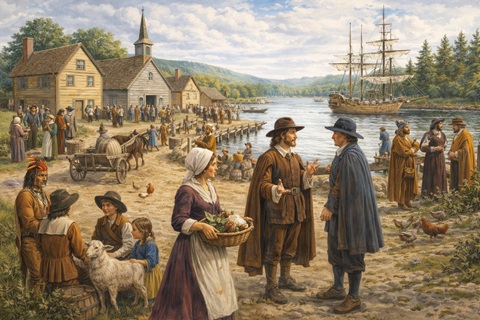
Roger Williams, Anne Hutchinson, and the Founding of Rhode Island and Connecticut
In the early days of the English colonies in North America, life was not always about freedom and opportunity in the way we often imagine today. Many of the settlers who came to places like Massachusetts were seeking religious freedom—but once they arrived, they sometimes created communities that allowed very little freedom for people who disagreed with them. This led to conflict, debate, and eventually the founding of new colonies.
Two of the most important figures in this story were Roger Williams and Anne Hutchinson. Both challenged the religious rules of the Massachusetts Bay Colony. Both spoke out against authority. And both were forced to leave. Yet their ideas did not disappear. Instead, they helped shape new colonies—especially Rhode Island and Connecticut—that would become important examples of greater freedom in early America.
This is the story of dissenters—people who dared to disagree—and how their courage helped change the direction of colonial life.
Life in the Massachusetts Bay Colony
To understand why Roger Williams and Anne Hutchinson were so controversial, we first need to understand the colony they lived in.
The Massachusetts Bay Colony was founded in the 1630s by Puritans. The Puritans were a group of English Protestants who wanted to “purify” the Church of England. They believed they were building a special society—what some leaders called a “city upon a hill”—that would serve as a model for others.
However, this vision came with strict rules:
- Church and government were closely connected
- Only male church members could vote
- Religious beliefs were expected to be uniform
- Disagreement with leaders was not tolerated
The Puritans believed that unity was essential. If too many people challenged authority, they feared their entire community—and their relationship with God—would fall apart.
This meant that dissent, or disagreement, was seen as dangerous.
Roger Williams and Religious Freedom
Roger Williams was one of the first and most important dissenters in New England.
Who Was Roger Williams?
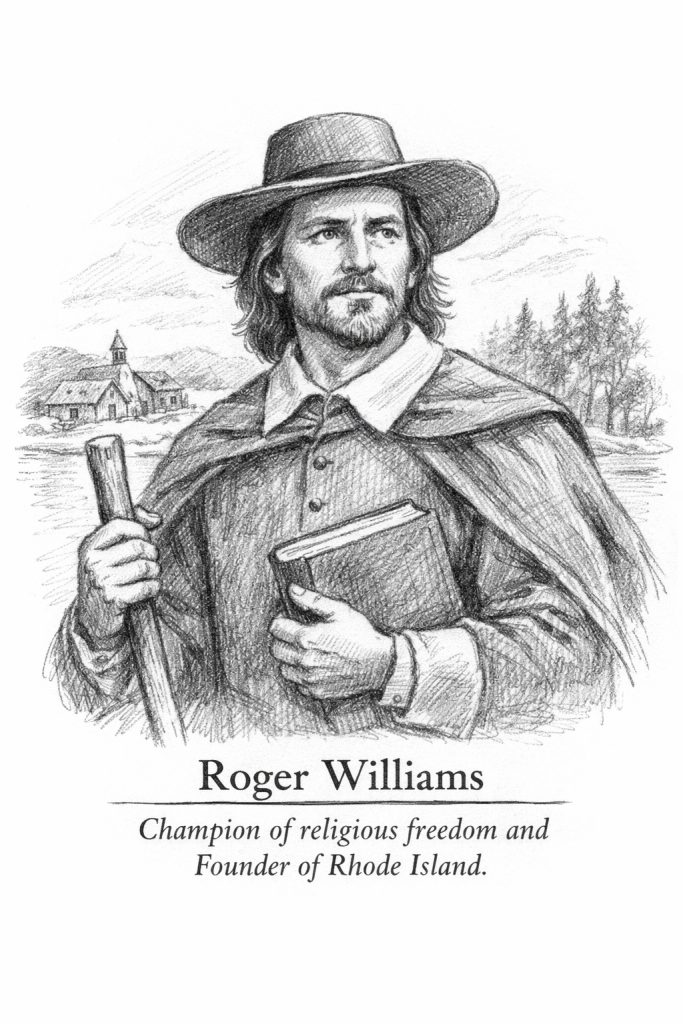
Roger Williams was a minister who arrived in Massachusetts in 1631. He was highly educated and deeply religious. At first, he seemed like a good fit for the Puritan community—but it didn’t take long for problems to arise.
Williams had strong beliefs about religious freedom that set him apart from other Puritans.
His Ideas
Roger Williams argued several bold ideas:
- Separation of church and state
He believed that government should not be involved in religious matters. In his view, forcing people to follow a certain religion was wrong. - Freedom of conscience
Williams believed that each person should be free to follow their own religious beliefs without punishment. - Fair treatment of Native Americans
He argued that English settlers had no right to take land from Native Americans without paying for it.
These ideas may sound familiar today—but in the 1600s, they were considered shocking.
Conflict with Authorities
The leaders of Massachusetts Bay strongly disagreed with Williams. They believed:
- Religion and government must work together
- Religious unity was necessary for survival
- Questioning authority could lead to chaos
Williams continued to speak out, and his views spread. This made the colony’s leaders nervous.
In 1635, they decided to take action.
Banishment
Roger Williams was put on trial and found guilty of spreading “dangerous opinions.” He was ordered to leave the colony.
In the winter of 1636, Williams was forced to flee into the wilderness. He survived with help from Native Americans, including members of the Narragansett tribe.
Founding of Rhode Island
After leaving Massachusetts, Roger Williams began something new.
A New Kind of Colony
Williams founded a settlement called Providence, which would later become part of the colony of Rhode Island.
This colony was very different from Massachusetts.
Williams built it on principles that were radical for the time:
- Religious freedom for all people
- Separation of church and government
- Fair dealings with Native Americans
People of many different beliefs were welcome in Rhode Island. This included Baptists, Quakers, Jews, and others who were not accepted in other colonies.
Why Rhode Island Was Important
Rhode Island became a safe place for dissenters—people who did not fit into strict Puritan society.
It showed that a colony could survive without forcing everyone to believe the same thing.
Over time, the idea of religious freedom would become one of the most important principles in American history—and Roger Williams played a key role in that development.
Anne Hutchinson and Speaking Out
While Roger Williams challenged the colony as a minister, Anne Hutchinson did so as a woman—and her story is just as powerful.
Who Was Anne Hutchinson?
Anne Hutchinson arrived in Massachusetts in 1634 with her family. She was intelligent, confident, and deeply interested in religion.
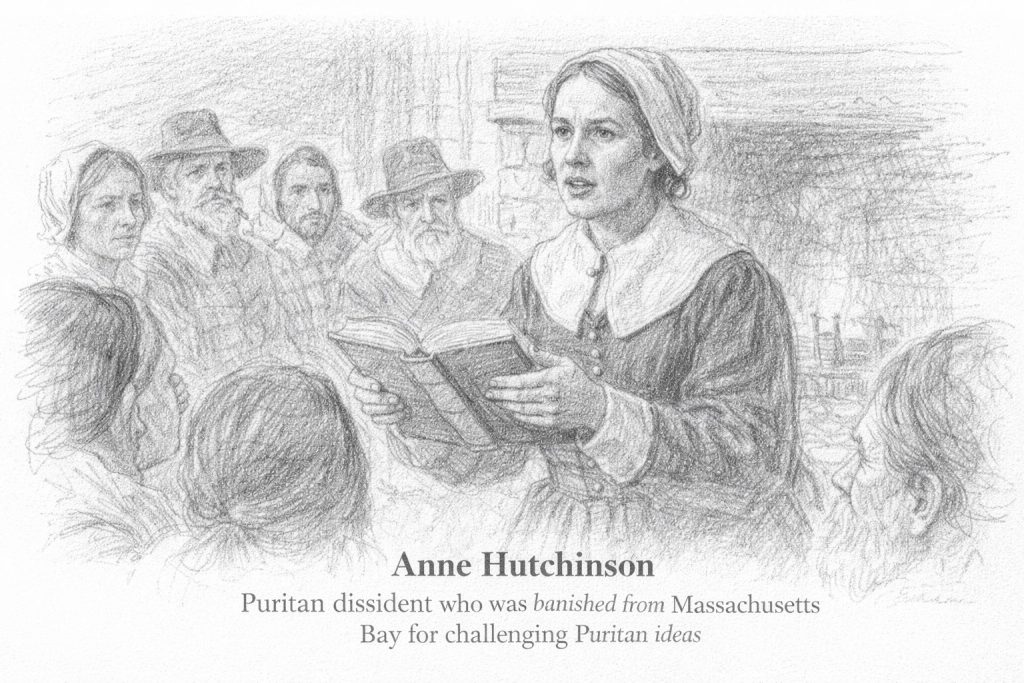
At a time when women were expected to remain quiet in public life, Hutchinson did something unusual: she began holding meetings in her home to discuss sermons and religious ideas.
Her Beliefs
Anne Hutchinson believed that:
- People could have a direct relationship with God
- Religious leaders were not the only source of truth
- Salvation came from God’s grace, not just good behavior
She also criticized some ministers, saying they were too focused on rules and not enough on faith.
Why This Was Controversial
Hutchinson’s actions challenged the social and religious order in several ways:
- She questioned male authority
In Puritan society, ministers and male leaders held power. Hutchinson openly criticized them. - She held meetings
Large gatherings in her home attracted many followers, including men. - She promoted new ideas
Her beliefs were seen as a threat to the colony’s religious unity.
The leaders of Massachusetts Bay saw her as a serious danger.
The Trial of Anne Hutchinson
In 1637, Anne Hutchinson was put on trial.
What Happened?
During the trial, Hutchinson defended herself strongly. She argued that her beliefs came from her understanding of God.
However, her confidence and refusal to back down only made the situation worse in the eyes of the judges.
The court found her guilty of heresy (holding beliefs that went against accepted teachings) and of challenging authority.
Banishment
Like Roger Williams, Anne Hutchinson was banished from the Massachusetts Bay Colony.
She and her followers were forced to leave and find a new place to live.
New Beginnings: Rhode Island and Beyond
After her banishment, Anne Hutchinson traveled south.
Life After Massachusetts
Hutchinson and her followers first settled in Rhode Island, where Roger Williams had created a more tolerant environment.
Later, she moved to an area that is now part of New York.
Although her life ended tragically in a conflict with Native Americans in 1643, her legacy lived on.
Her Impact
Anne Hutchinson’s courage helped show that:
- Women could speak out and influence society
- Individuals could challenge authority
- Religious ideas could be debated openly
Her story became an important example of standing up for one’s beliefs, even in the face of great risk.
The Founding of Connecticut
While Roger Williams and Anne Hutchinson were creating change through dissent, another group of settlers was forming a new colony for different reasons.
Why Connecticut Was Founded
Some Puritans in Massachusetts were unhappy—not because they wanted religious freedom in the same way as Williams or Hutchinson, but because they wanted:
- More land
- Greater economic opportunity
- Some differences in how communities were governed
A minister named Thomas Hooker led a group of settlers westward in the 1630s. They established settlements along the Connecticut River.
A More Flexible Government
The settlers in Connecticut created a document called the Fundamental Orders of Connecticut in 1639.
This document is important because:
- It helped establish a government based on the consent of the governed
- It allowed more men to participate in government (not just church members)
- It showed a move toward more democratic ideas
While Connecticut was still a Puritan colony, it was less strict than Massachusetts Bay.
Comparing the Colonies
By the late 1600s, New England had several colonies with different ideas about religion and government.
Massachusetts Bay
- Very strict religious rules
- Limited voting rights
- Little tolerance for dissent
Rhode Island
- Religious freedom for all
- Separation of church and state
- Welcoming to dissenters
Connecticut
- More flexible government
- Broader participation in voting
- Still religious, but less strict
These differences show how the colonies were not all the same. Each one developed in its own way, often because of disagreements.
Why Dissent Matters
The stories of Roger Williams and Anne Hutchinson teach us an important lesson: dissent can lead to change.
At the time, both individuals were seen as troublemakers. They challenged authority, questioned leaders, and refused to stay silent.
But their ideas did not disappear. Instead, they helped create new communities and new ways of thinking.
Lasting Effects
The ideas promoted by these dissenters influenced:
- Religious freedom in America
- The separation of church and state
- The importance of individual rights
Today, these ideas are part of the foundation of the United States.
Conclusion
The early colonies of New England were shaped not only by cooperation and shared beliefs, but also by disagreement and conflict.
Roger Williams believed in religious freedom and fair treatment for all people. Anne Hutchinson believed in speaking out and following one’s own understanding of faith. Both were forced out of Massachusetts—but instead of disappearing, they helped create new communities where different ideas could flourish.
The founding of Rhode Island and Connecticut showed that there was more than one way to build a colony. Some communities chose strict control, while others moved toward greater freedom.
In the end, the courage of dissenters helped expand the idea of what freedom could mean. Their willingness to question authority helped shape a future where people would have the right to believe, speak, and live according to their own convictions.
And that is why their stories still matter today.
