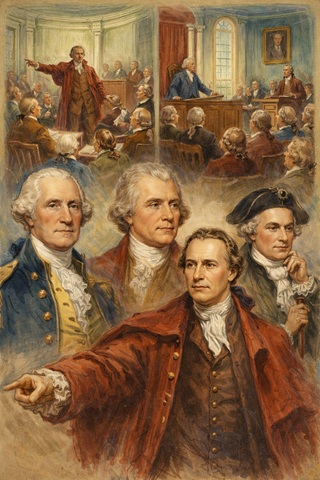
When we think about government today, we often picture elections, laws, and leaders chosen by the people. But where did these ideas come from? In colonial America, long before the United States became an independent nation, colonists were already practicing forms of self-government. They were learning how to make decisions, create laws, and solve problems as communities.
Colonial government did not appear fully formed all at once. Instead, it developed slowly over time. Colonists brought ideas with them from England, but they also adapted those ideas to fit their new lives in America. Distance from England, daily challenges, and the need for cooperation all pushed colonists to govern themselves in new ways.
In this essay, we will explore how colonial government worked, including local assemblies and town meetings, early democratic ideas, and the different ways colonies governed themselves.
The Need for Self-Government
When English settlers first arrived in North America, they were far from their home country. Crossing the Atlantic Ocean could take weeks or even months. Because of this distance, it was difficult for the English government to control everyday life in the colonies.
Colonists quickly realized that they needed to make their own decisions. They had to create rules for their communities, settle disagreements, and organize their daily lives.
At the same time, many colonists believed they had certain rights as English citizens. In England, there was already a tradition of limited government and representation, especially through Parliament. Colonists expected to have a voice in how they were governed.
This combination—distance from England and belief in rights—helped lead to the growth of self-government in the colonies.
Local Government and Community Decisions
One of the most important parts of colonial government was local government. This meant that people in towns and communities made decisions about their own affairs.
In the New England Colonies, local government often took the form of town meetings. A town meeting was a gathering where adult male colonists could come together to discuss issues and vote on decisions.
At these meetings, people decided things like how to spend money, build roads, support schools, and enforce rules. Everyone who could attend had a chance to speak and vote, making town meetings an early example of direct democracy.
Town meetings helped create a strong sense of community. People worked together to solve problems and make decisions that affected their daily lives.
In other regions, local government worked differently. In the Southern Colonies, where people lived farther apart, town meetings were less common. Instead, local decisions were often made by county governments or appointed officials.
Even though the systems were different, the idea of local control was important across the colonies.
Colonial Assemblies
In addition to local governments, colonies also had larger governing bodies called assemblies. These were groups of representatives chosen by the people (or by a smaller group of eligible voters) to make laws for the colony.
One of the earliest examples was the House of Burgesses in Virginia, established in 1619. This assembly allowed colonists to elect representatives to help govern the colony.
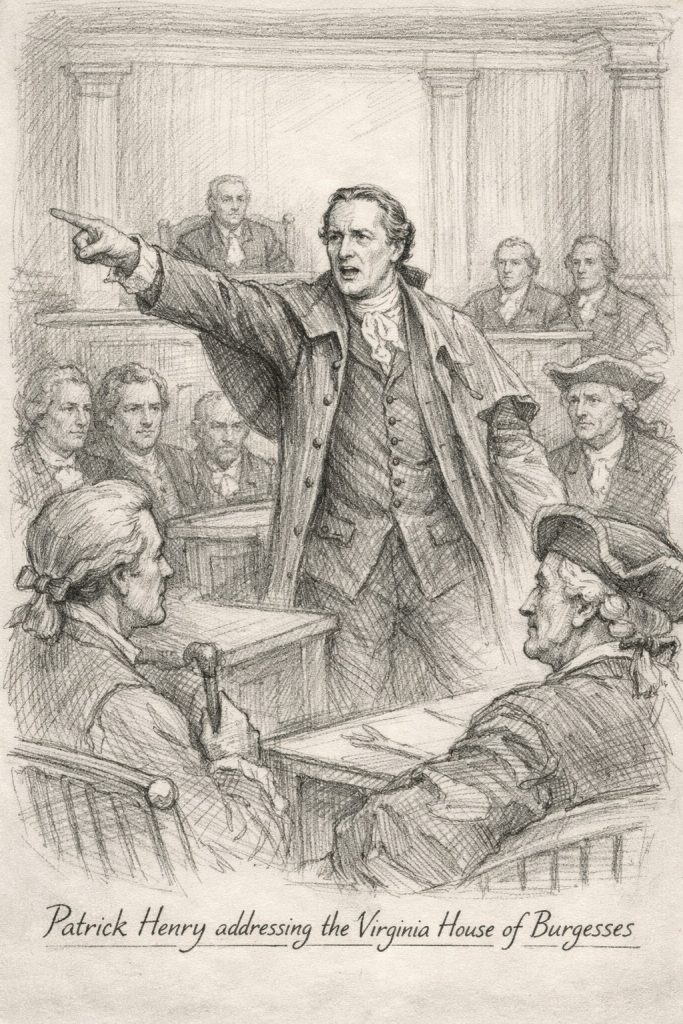
Other colonies soon followed this model. Most colonies had two parts to their government: a governor and an assembly.
The governor was often appointed by the king or by the owners of the colony. The governor represented the interests of England and had the power to approve or reject laws.
The assembly, on the other hand, represented the colonists. Members of the assembly were usually elected by property-owning men. They made laws, set taxes, and addressed the needs of the colony.
Sometimes, there were disagreements between governors and assemblies. Assemblies often wanted more power and independence, while governors tried to enforce the authority of England.
These conflicts helped colonists develop ideas about representation and the limits of government power.
Types of Colonial Governments
Not all colonies were governed in the same way. There were three main types of colonial government: royal, proprietary, and charter colonies.
Royal colonies were controlled directly by the king. The king appointed the governor, who had significant authority. Examples of royal colonies included Virginia and later South Carolina.
Proprietary colonies were granted to individuals or groups who were given the right to govern the land. These owners, called proprietors, could appoint governors and make decisions. Maryland and Pennsylvania were examples of proprietary colonies.
Charter colonies had the most independence. They were granted a charter that allowed colonists to govern themselves. Colonists in these colonies often elected their own governors and officials. Connecticut and Rhode Island were examples of charter colonies.
Even though these types of government were different, all of them included some form of representation and local decision-making. Over time, colonists became more comfortable with the idea of governing themselves.
Early Democratic Ideas
The colonial experience helped develop important democratic ideas—ideas that are still important today.
One of these ideas was representation. Colonists believed that people should have a say in the laws that affect them. This idea is often summed up in the phrase “no taxation without representation,” which became important later during the American Revolution.
Another key idea was consent of the governed. This means that governments get their power from the people. If the people do not agree with how they are governed, they have the right to seek change.
The rule of law was also important. This means that everyone, including leaders, must follow the law. Laws were meant to be fair and apply to all members of society, at least in theory.
It is important to note that these early democratic ideas did not apply to everyone. Voting rights were usually limited to white men who owned property. Women, enslaved people, Native Americans, and others were not included in the political system.
Even with these limitations, the ideas developed during this time would later expand and become more inclusive.
Examples of Self-Government
Several key events and systems show how colonists practiced self-government.
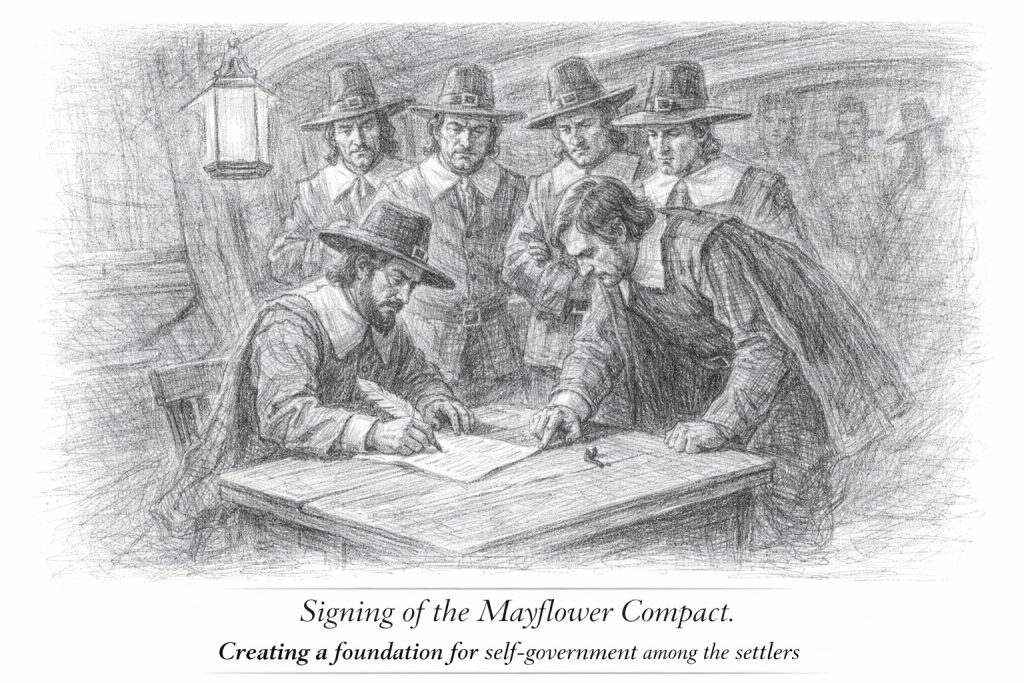
In 1620, a group of settlers known as the Pilgrims created the Mayflower Compact before settling in Plymouth. This was an agreement to form a government and follow laws made for the good of the colony. It showed that colonists could organize and govern themselves.
Town meetings in New England allowed people to participate directly in decision-making. This gave colonists experience in discussing issues, debating ideas, and voting.
Colonial assemblies, like the House of Burgesses, allowed representatives to create laws and manage the colony’s affairs.
These examples helped build skills and ideas that would later be used in the formation of the United States.
Challenges in Colonial Government
Self-government in the colonies was not always easy. There were many challenges.
One challenge was conflict between colonists and governors. Governors often tried to enforce rules from England, while colonists wanted more control over their own affairs.
Another challenge was inequality. Not everyone had a voice in government. This meant that decisions were often made by a limited group of people.
There were also disagreements within colonies. Different groups might have different interests or ideas about how things should be done.
Despite these challenges, colonists continued to develop systems of government that allowed for participation and representation.
How Geography Affected Government
Geography played an important role in how colonies governed themselves.
In New England, towns were close together, making it easier for people to gather for meetings and participate in local government.
In the Middle Colonies, diversity of people and beliefs led to a variety of government practices. Cities and towns often had organized systems, while rural areas relied more on local leaders.
In the Southern Colonies, large plantations and spread-out populations made town meetings less practical. Instead, county governments and appointed officials played a larger role.
These differences show how environment and population influenced government systems.
Lasting Impact
The systems of government developed in the colonies had a lasting impact on American history.
Colonists gained experience in self-rule, representation, and lawmaking. They learned how to organize governments, debate ideas, and solve problems as communities.
These experiences helped prepare colonists for independence. When tensions with England grew in the 1700s, colonists already had a strong sense of their rights and their ability to govern themselves.
Many of the ideas developed during the colonial period—such as representation, rule of law, and limited government—became central to the founding of the United States.
Conclusion
Colonial government and self-rule were important parts of life in early America. Through town meetings, local governments, and colonial assemblies, colonists learned how to make decisions and create laws.
Although not everyone was included in these systems, the ideas that developed during this time laid the groundwork for modern democracy.
For middle school students, this topic offers an important lesson: government is not just about leaders—it is about people working together to make decisions that affect their lives. The colonists’ efforts to govern themselves helped shape the future of the United States and continue to influence how we think about government today.
