When many Europeans first crossed the Atlantic Ocean in the late 1400s and early 1500s, they believed they had discovered a “New World.” To them, this land was unknown, mysterious, and full of possibility.
But there was one very important problem with that idea.
It wasn’t new at all.
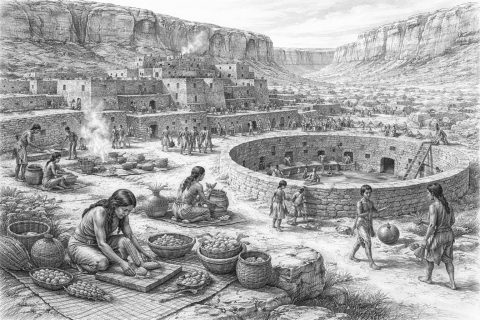
For thousands of years before Europeans arrived, the lands of North and South America were already home to millions of people. These people were part of hundreds of different Native American nations, each with its own language, traditions, government, and way of life.
So what really happened when Europeans arrived?
The answer is a complicated story of diversity, first encounters, cooperation, and conflict. It is a story that includes friendship and trade—but also misunderstanding, disease, and war.
To understand Colonial America, we must begin with this truth: it was not an empty land waiting to be settled. It was a world already filled with life.
Native American Cultures: A World of Diversity
When people hear the term “Native Americans,” they sometimes imagine one single group of people who all lived the same way. But this is not accurate at all.
In reality, Native Americans were incredibly diverse.
There were hundreds of different tribes and nations, each with unique cultures. They spoke different languages, wore different clothing, built different types of homes, and lived in different environments.
Let’s explore just a few examples to see how varied these cultures were.
1. The Eastern Woodlands: Forest Life and Farming
In the eastern part of North America, where many of the English colonies were later established, Native American groups lived in forests and near rivers.
These groups included nations like the Powhatan, Wampanoag, and the Haudenosaunee (Iroquois Confederacy).
They often lived in villages made up of wooden homes:
- Some built longhouses, large structures that could house many families.
- Others built smaller homes called wigwams.
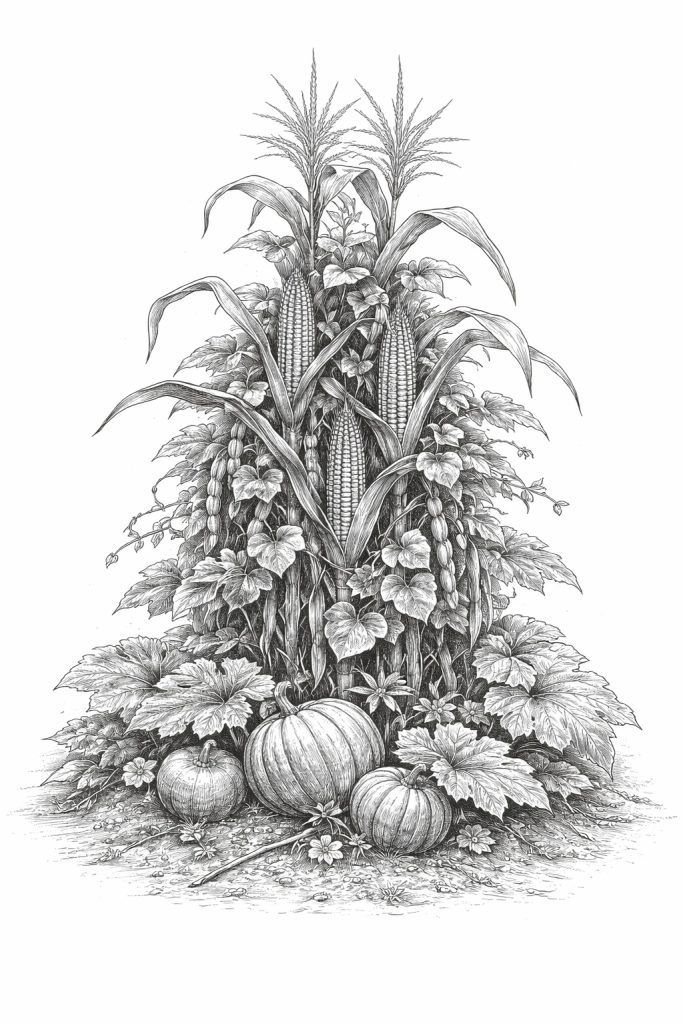
Many Eastern Woodlands peoples practiced farming. They grew crops like:
- Corn
- Beans
- Squash
These three crops were often called the “Three Sisters” because they were planted together and helped each other grow.
They also hunted animals such as deer and fished in rivers and lakes.
Some groups, like the Haudenosaunee, formed powerful political alliances. The Iroquois Confederacy united several nations under a system of shared decision-making, showing that Native Americans had complex governments long before Europeans arrived.
2. The Great Plains: Life on the Move
Farther west, on the Great Plains, Native American groups lived very differently.
The Plains were wide open grasslands, and many tribes depended on buffalo (bison) for survival.
These groups, including the Lakota and Cheyenne, often lived in tipis, which were easy to take down and move. This was important because they followed buffalo herds as they traveled.
Buffalo provided almost everything they needed:
- Meat for food
- Hides for clothing and shelter
- Bones for tools
Life on the Plains required skill, teamwork, and deep knowledge of the land.
3. The Southwest: Adapting to the Desert
In the dry, hot regions of the Southwest, Native American groups such as the Hopi and Zuni developed different ways of living.
They built homes made of stone and clay called adobe houses. Some lived in large, multi-story buildings.
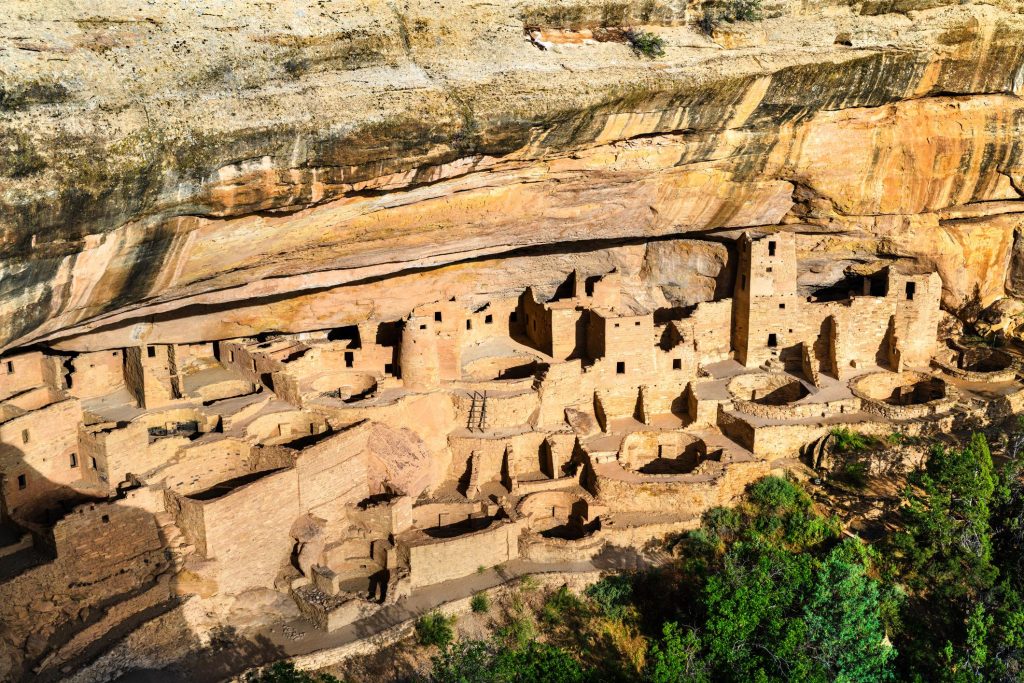
Because water was scarce, they developed advanced farming techniques, including irrigation systems to bring water to their crops.
Their cultures were rich with art, ceremonies, and strong community traditions.
4. The Pacific Northwest: Abundance and Art
Along the Pacific Northwest coast, Native Americans lived in an area full of natural resources.
Groups such as the Tlingit and Chinook relied heavily on fishing, especially salmon.
Because food was plentiful, they could build large wooden homes and create detailed art, including totem poles that told stories about their families and beliefs.
A Key Idea: Many Cultures, Not One
These examples show something very important:
There was no single “Native American culture.”
Instead, there were many cultures—each shaped by the environment, history, and traditions of its people.
Understanding this diversity helps us avoid oversimplifying history. It reminds us that the Americas were already full of complex, thriving societies long before Europeans arrived.
First Encounters: Meeting Across Worlds
When Europeans first arrived in the Americas, they encountered Native Americans for the first time.
These meetings were often confusing for both sides.
Imagine meeting someone whose language you don’t understand, whose customs are unfamiliar, and whose appearance is very different from your own. That’s what these early encounters were like.
Curiosity and Caution
At first, many interactions were shaped by curiosity.
Native Americans wanted to understand who these newcomers were. Europeans were equally curious about the people they met.
In some cases, Native Americans approached Europeans with caution but also with a willingness to communicate.
Europeans often relied on Native Americans for help. They did not know the land, the climate, or how to survive in this new environment.
Early Cooperation
Some of the earliest encounters led to cooperation.
One well-known example involves the English settlers at Plymouth and the Wampanoag people.
The settlers struggled to survive. They were not used to the land and faced a harsh winter. Many became sick or died.
The Wampanoag helped them by:
- Teaching them how to grow crops like corn
- Showing them how to fish and hunt
- Helping them understand the local environment
A Native American named Squanto (Tisquantum) played a key role in helping the settlers communicate and survive.
This cooperation led to a period of peace and even shared celebrations, such as the event often remembered as the “First Thanksgiving.”
Misunderstandings Begin
Even in these early moments of cooperation, there were misunderstandings.
Europeans and Native Americans had very different ideas about:
- Land ownership
- Government
- Trade
- Religion
For example, many Native American groups believed land was shared and used by the community. Europeans, on the other hand, believed land could be owned by individuals.
These differences would lead to serious problems later.
Trade and Exchange: Sharing Goods and Ideas
As Europeans and Native Americans interacted more, trade became an important part of their relationship.
What They Traded
Both groups had things the other wanted.
Native Americans traded:
- Animal furs (especially beaver pelts)
- Food
- Knowledge of the land
Europeans traded:
- Metal tools
- Weapons
- Cloth
- Glass beads
This trade benefited both sides, at least at first.
The Fur Trade
One of the most important trading systems was the fur trade.
European demand for beaver hats made animal furs extremely valuable.
Native Americans hunted animals and traded the furs to Europeans. In return, they received goods that were useful and sometimes easier to use than traditional tools.
This created strong economic connections between the two groups.
Cultural Exchange
Trade also led to the exchange of ideas and practices.
Native Americans introduced Europeans to new foods such as:
- Corn
- Potatoes
- Tomatoes
These foods would eventually spread around the world.
Europeans introduced new animals, such as horses, which transformed life for many Plains tribes.
This exchange of goods and ideas is sometimes called the Columbian Exchange.
Conflict: When Cooperation Broke Down
While there were moments of cooperation, conflict became more common over time.
Why did this happen?
There were several key reasons.
1. Competition for Land
As more Europeans arrived, they needed more land.
They built farms, towns, and cities. This often meant taking land that Native Americans had used for generations.
Because Europeans believed in private land ownership, they often claimed land in ways that Native Americans did not recognize or agree with.
This led to growing tensions.
2. Different Worldviews
Europeans and Native Americans had different ways of understanding the world.
These differences affected how they viewed:
- Nature
- Property
- Leadership
- Religion
For example, some Europeans believed they had a right—even a duty—to expand and control land. Native Americans often saw land as something to be respected and shared.
These differences made it difficult to find common ground.
3. Disease: An Invisible Disaster
One of the most devastating effects of European arrival was the spread of disease.
Europeans brought illnesses such as:
- Smallpox
- Measles
- Influenza
Native Americans had no immunity to these diseases.
As a result, entire communities were wiped out.
Some estimates suggest that millions of Native Americans died from disease in the years following European contact.
This had a huge impact on Native societies, weakening communities and making it harder to resist European expansion.
4. War and Violence
As tensions grew, conflicts sometimes turned into war.
One example is King Philip’s War (1675–1676), a conflict between New England colonists and several Native American groups.
The war was violent and destructive. Many lives were lost on both sides.
Other conflicts occurred throughout the colonies, often over land and control.
A Complicated Relationship
The relationship between Europeans and Native Americans was not simple.
It was not just cooperation, and it was not just conflict.
Often it was both at the same time.
- Some Native American groups formed alliances with European powers.
- Others resisted European expansion.
- Some relationships changed over time, shifting from friendship to conflict.
Similarly, Europeans did not all act the same way. Different colonies and countries had different approaches.
History is full of these complexities.
Why Balance and Accuracy Matter
When we study this topic, it is important to be both balanced and accurate.
That means recognizing:
- The richness and diversity of Native American cultures
- The ways Native Americans helped European settlers survive
- The benefits and exchanges that occurred through trade
- The harm caused by disease, land loss, and conflict
It also means understanding that Native Americans were not just part of the past—they are still here today, with vibrant cultures and communities.
Looking Back—and Thinking Forward
The story of Colonial America begins with a meeting between different worlds.
Europeans arrived with hopes of opportunity and freedom.
Native Americans were already living full, complex lives on the land.
Their interactions shaped the future in powerful ways—sometimes through cooperation, sometimes through conflict.
As you think about this history, consider these questions:
- What might it have felt like to meet someone from a completely different culture?
- How could misunderstandings have been avoided?
- What lessons can we learn from this history today?
Understanding the past helps us better understand the present.
And it reminds us that history is not just about events—it’s about people, choices, and the ways those choices affect others.
Final Thought
The Americas were never an empty stage waiting for a story to begin.
They were already filled with stories—millions of them.
When Europeans arrived, they didn’t start history here.
They became part of a story that was already unfolding.
