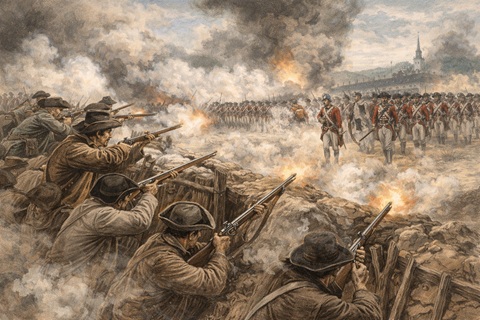
The air was thick with smoke, and the sound of drums echoed across the hills above Boston.
It was June 1775, and the American colonies were already at war with Great Britain. Just weeks earlier, fighting had broken out at Lexington and Concord. Now, both sides were preparing for something bigger.
On a narrow stretch of land just outside Boston, colonial soldiers stood behind freshly dug defenses, staring down at rows of British troops below. Many of these colonists were not trained soldiers. They were farmers, blacksmiths, and shopkeepers. But they had taken up arms to defend what they believed were their rights.
They were about to face one of the most powerful armies in the world.
The Siege of Boston Begins
After the fighting at Lexington and Concord in April 1775, colonial militia from across Massachusetts rushed toward Boston. Within days, British troops found themselves surrounded. The colonists controlled the roads and countryside, while the British held the city and its harbor.
This tense situation became known as the Siege of Boston.
For weeks, both sides watched each other carefully. The British army, trained and disciplined, waited inside the city. The colonial forces, less experienced but highly motivated, held their positions outside. No one knew when the next major battle would come—but everyone knew it was coming.
A Race for the High Ground
In June, colonial leaders received troubling news. The British were planning to move out of Boston and take control of the hills surrounding the city. From those hills, they could fire down on colonial positions and regain control of the area.
The colonists decided to act first.
On the night of June 16, under the cover of darkness, colonial troops quietly moved onto the hills overlooking Boston. Their original orders were to fortify Bunker Hill, but instead they built their main defenses on nearby Breed’s Hill, which was closer to the city.
Working through the night, they dug trenches and built earthen walls using simple tools. By the time the sun rose, a strong defensive position stood where there had been nothing the night before.
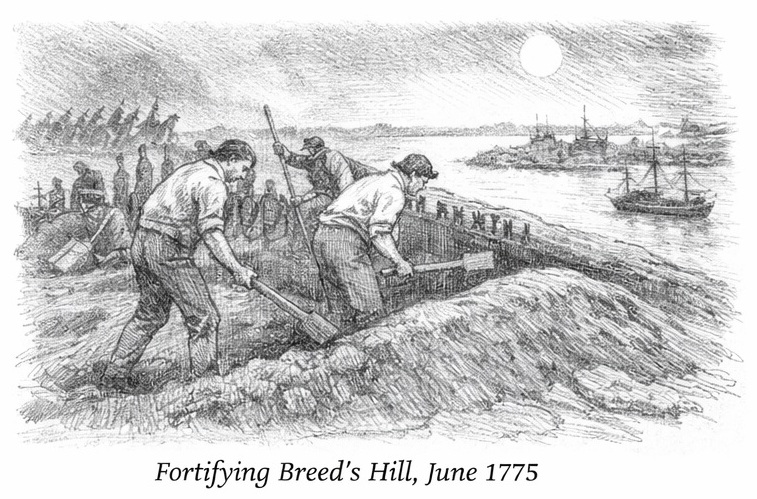
When British officers looked out from Boston that morning, they were stunned.
The Battle Begins
British General William Howe knew he had to act quickly. If the colonists were allowed to remain on the hill, they would have a dangerous advantage. He ordered an attack.
As British troops prepared to advance, colonial soldiers waited nervously behind their defenses. They could see the red-coated soldiers forming lines below them. Many of the colonists had never been in a battle like this before.
They had one important advantage, though: they were protected by their defenses, and they were determined not to waste their limited ammunition.
A famous command was passed along the colonial line:
“Don’t fire until you see the whites of their eyes.”
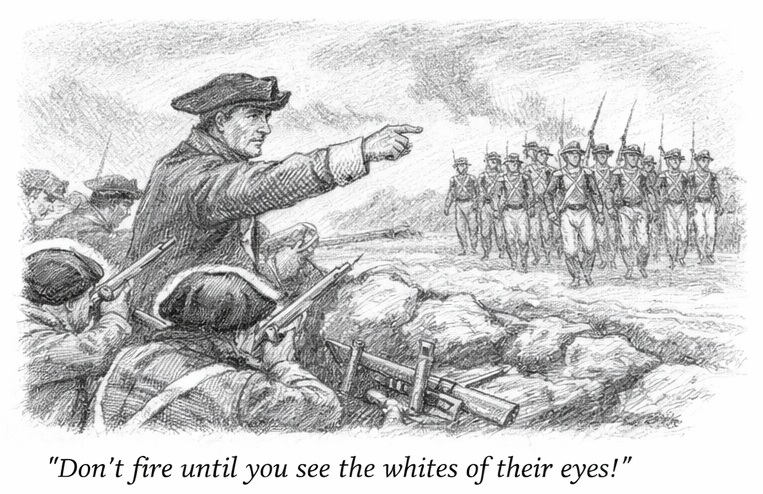
It was a reminder to wait until the British were close—close enough to make every shot count.
The First Assault
The British soldiers began their march up the hill in neat, orderly lines. Drums beat steadily as they advanced.
The colonists held their fire.
The tension grew as the British climbed closer and closer. Then, suddenly, the colonists fired.
The effect was devastating.
British soldiers fell, and the lines broke apart. The attack failed, and the British were forced to retreat down the hill.
For the colonists, it was an incredible moment. They had just stood their ground against a professional army—and won the first round.
The Second Assault
The British regrouped and prepared to try again.
Once more, they advanced up the hill, and once more, the colonists waited. They fired with deadly accuracy.
Again, the British attack collapsed.
At this point, the British were shocked. They had expected an easy victory, but instead they were facing fierce resistance.
The Final Push
But the battle was not over.
The colonists had a serious problem: they were running out of ammunition. They had fought bravely and carefully, but their supplies were limited.
The British prepared for a third attack.
This time, when they advanced, the colonists could not fire as effectively. As the British reached the top of the hill, the fighting turned into close combat.
There was chaos—shouting, smoke, and confusion. Muskets were used not just for firing, but as clubs. The colonists fought as long as they could, but eventually were forced to retreat.
The British had taken the hill.
A Costly Victory
On paper, the British had won the Battle of Bunker Hill. However, the victory came at a terrible cost.
More than 1,000 British soldiers were killed or wounded—far more than the colonists had lost.
For the British, the battle was a warning. If the colonists could fight this hard so early in the war, what would come next?
For the colonists, the battle meant something even more important.
They had proven that they could stand up to the British army.
A New Kind of Confidence
The news of Bunker Hill spread quickly through the colonies.
Although they had been forced to retreat, the colonists felt a growing sense of confidence. They had faced the British in open battle—and they had nearly won.
This realization changed everything.
The war was no longer just a protest. It was a real fight, and the colonists believed they had a chance.
George Washington Arrives
Not long after the battle, a new leader arrived to take command of the colonial forces.
His name was George Washington.
Washington had experience from the French and Indian War, and he understood the challenges ahead. The colonial army was brave, but it needed organization, discipline, and leadership.
Washington set to work turning a loose group of militia into a more unified army.
The Long Siege
Even after Bunker Hill, the fighting around Boston did not end immediately.
Instead, the two sides settled into a long standoff.
For months, the colonial army surrounded the city, while the British remained inside. Both sides waited, watched, and prepared.
Washington knew that a direct attack on Boston would be risky. Instead, he looked for another way to force the British out.
A Bold Move
That opportunity came in early 1776.
During the winter, a young officer named Henry Knox had led an incredible effort to transport heavy cannons from Fort Ticonderoga to Boston. It was a difficult journey across snow and rough terrain, but he succeeded.
Washington now had the artillery he needed.
In March 1776, under cover of darkness, colonial troops moved the cannons onto Dorchester Heights, a high area overlooking Boston.
When the British saw the cannons the next morning, they understood the danger immediately. From that position, the colonists could fire on the city and the harbor.
The British had a choice: stay and risk destruction, or leave.
They chose to leave.
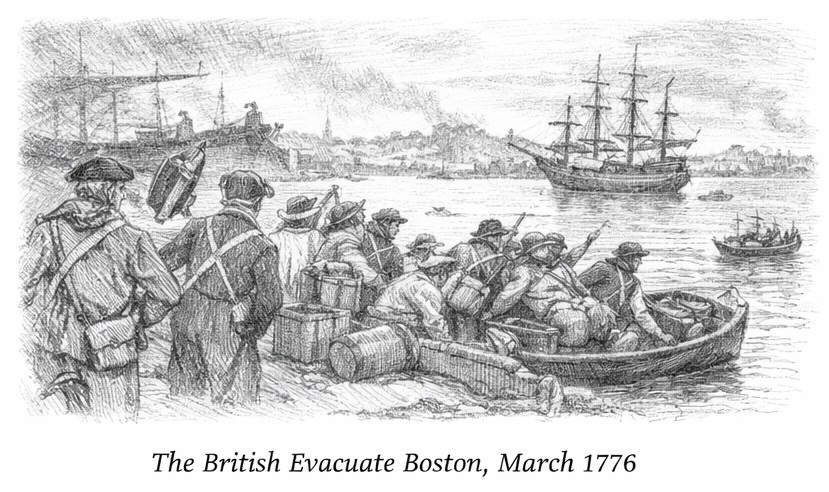
The British Leave Boston
In March 1776, British troops evacuated Boston and sailed away.
For the colonists, it was a major victory.
Without a large, decisive battle, they had forced the British out of one of the most important cities in North America.
It proved that patience, strategy, and determination could be just as powerful as fighting.
Beyond Boston
The war, however, was far from over.
In fact, it was just beginning.
The fighting soon spread beyond Massachusetts. One early effort by the colonists was an attempt to capture the British-controlled city of Quebec in Canada.
The goal was to bring Canada into the fight and weaken British power in North America.
But the attack failed. The colonists faced harsh weather, strong defenses, and determined resistance. They were forced to retreat.
This defeat was a reminder that the war would not be easy.
Lessons from the Early Battles
The early battles of the American Revolution—Lexington and Concord, Bunker Hill, and the Siege of Boston—taught the colonists important lessons.
They learned that:
- The British army was strong, but not unbeatable
- Careful planning and strategy could make a difference
- Unity and cooperation were essential
They also learned that the war would require sacrifice.
A War of Determination
What made these early battles so powerful was not just the fighting—it was the determination behind it.
The colonists were not professional soldiers. They were just ordinary people who believed in something: they believed in their rights, and they believed in their communities.
And they were willing to fight for them.
A Final Thought
The Battle of Bunker Hill is often remembered as a British victory, but its true importance lies in what it revealed:
- It showed that the colonists had the courage and ability to stand up to a powerful empire.
- It gave them confidence.
- It gave them hope.
And it helped set the stage for everything that would come next.
Conclusion
At Bunker Hill:
- The British won the ground
- But the colonists gained confidence
In Boston:
- The colonists forced the British to leave
Together, these events showed that the fight for independence was real—and that the outcome was still undecided.
Reflection Questions
- Why was the Battle of Bunker Hill important even though the colonists lost?
- What advantages did the British have? What advantages did the colonists have?
- How did George Washington change the Continental Army?
- Why was the victory in Boston significant for the colonists?