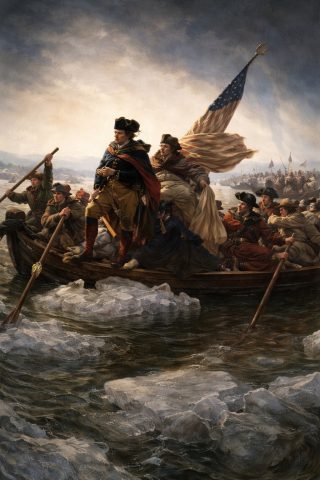
Few events in history have shaped the modern world as profoundly as the American Revolution. Between the 1760s and the early 1780s, thirteen British colonies transformed themselves into an independent nation and ignited a political experiment that continues to influence global ideas about liberty, governance, and democracy.
Yet the Revolution was far more complex than the familiar story of patriots defeating imperial rule. It involved fierce debates about political philosophy, military struggles across a vast continent, and dramatic personal stories of leaders and ordinary people alike.
Because the Revolution remains such a rich and fascinating subject, historians have produced a vast literature examining it from many different angles—military, political, social, and intellectual. For readers interested in exploring this pivotal era, the challenge is not finding books but choosing where to begin.
The following list presents ten of the best books on the American Revolution, ranging from accessible narrative histories to deeper scholarly works. Together they provide a well-rounded introduction to the origins, events, and meaning of the Revolution.
1. 1776 — David McCullough

David McCullough’s 1776 focuses on the dramatic first year of the Revolutionary War. The book follows George Washington and the Continental Army through a series of early setbacks and desperate retreats before culminating in the stunning American victories at Trenton and Princeton.
Rather than presenting a sweeping overview of the entire war, McCullough zooms in on one critical year when the American cause nearly collapsed.
Why Historians Recommend It
Historians frequently recommend this book because it brings the Revolution vividly to life. McCullough draws heavily on letters, diaries, and firsthand accounts to create a narrative that feels immediate and personal.
Although the book is aimed at general readers, it rests on serious historical research and accurately captures the precarious nature of the American struggle during the early months of the war.
Reading Level
Beginner to intermediate.
The prose is highly readable and engaging, making it an excellent entry point for readers new to the subject.
Who Should Read It
- Readers new to the Revolution
- Anyone interested in George Washington
- Those who enjoy narrative storytelling in history
2. The Glorious Cause — Robert Middlekauff

Part of the renowned Oxford History of the United States series, The Glorious Cause offers a comprehensive account of the Revolutionary era from the 1760s through the end of the war.
Middlekauff explores the political tensions between Britain and the colonies, the evolution of revolutionary ideology, and the military campaigns that ultimately led to American independence.
Why Historians Recommend It
Many historians consider this one of the best single-volume histories of the Revolution. It balances political, military, and social history while maintaining a clear narrative.
The book is also admired for its careful scholarship and thoughtful interpretation of events.
Reading Level
Intermediate.
The writing is accessible but more detailed and analytical than popular histories.
Who Should Read It
- Readers seeking a comprehensive overview
- Students studying the Revolutionary era
- Anyone wanting a reliable and balanced history
3. The Ideological Origins of the American Revolution — Bernard Bailyn

Bernard Bailyn’s classic work examines the political ideas that inspired the Revolution. Rather than focusing on battles or famous leaders, Bailyn investigates the pamphlets, essays, and political debates circulating throughout the colonies.
He argues that the Revolution was driven largely by deeply held fears of tyranny and corruption in British government.
Why Historians Recommend It
This book transformed how historians understand the Revolution. Bailyn demonstrated that colonial political thought was both sophisticated and deeply rooted in earlier English political traditions.
The work remains one of the most influential interpretations of Revolutionary ideology.
Reading Level
Advanced.
The arguments are intellectually demanding and require careful reading.
Who Should Read It
- College students studying early American history
- Readers interested in political philosophy
- Those who want to understand the ideas behind the Revolution
4. Washington’s Crossing — David Hackett Fischer

This Pulitzer Prize–winning book tells the story of the winter campaign of 1776–1777, when George Washington crossed the Delaware River and launched surprise attacks on British and Hessian forces at Trenton and Princeton.
Fischer places these events within a broader military and cultural context, explaining how American strategy evolved during the early years of the war.
Why Historians Recommend It
Historians admire this book for combining meticulous research with powerful storytelling. Fischer reconstructs military operations in remarkable detail while also exploring the motivations and experiences of soldiers on both sides.
It is widely considered one of the finest works of Revolutionary War military history.
Reading Level
Intermediate to advanced.
The book is richly detailed but still accessible to general readers.
Who Should Read It
- Readers interested in military history
- Anyone fascinated by Washington’s leadership
- Those who want a deeper look at a turning point in the war
5. Almost a Miracle: The American Victory in the War of Independence — John Ferling

John Ferling’s Almost a Miracle provides a sweeping narrative of the entire Revolutionary War, explaining how the colonies managed to defeat the British Empire despite enormous disadvantages.
Ferling carefully examines military campaigns, political struggles, and the international alliances that helped secure American victory.
Why Historians Recommend It
This book is praised for its balanced perspective and clear analysis of the strategic challenges facing both sides. Ferling emphasizes that American victory was far from inevitable.
The narrative shows just how fragile the revolutionary cause was throughout much of the conflict.
Reading Level
Intermediate.
The writing is engaging and accessible while still offering substantial historical depth.
Who Should Read It
- Readers seeking a full narrative of the war
- Military history enthusiasts
- Students exploring Revolutionary War strategy
6. The Radicalism of the American Revolution — Gordon S. Wood

In this Pulitzer Prize–winning work, Gordon Wood examines how the Revolution transformed American society. He argues that the Revolution was far more radical than many people realize, reshaping ideas about hierarchy, authority, and equality.
Wood traces how these changes gradually created a more democratic society.
Why Historians Recommend It
Wood is one of the most respected historians of early America, and this book represents one of his most influential interpretations.
It challenges readers to think about the Revolution not only as a war for independence but as a profound social transformation.
Reading Level
Intermediate to advanced.
The arguments are sophisticated but clearly explained.
Who Should Read It
- Readers interested in social history
- Students studying early American political culture
- Anyone curious about the long-term impact of the Revolution
7. The British Are Coming — Rick Atkinson

Rick Atkinson’s The British Are Coming is the first volume of a planned trilogy on the Revolutionary War. The book covers the conflict from the early colonial unrest through the early years of the war.
Atkinson’s narrative captures the drama and uncertainty of the struggle while introducing readers to a wide range of historical figures.
Why Historians Recommend It
Atkinson is known for combining rigorous research with compelling storytelling. His ability to recreate historical scenes and personalities makes the Revolution feel immediate and human.
The book also incorporates recent scholarship, offering fresh perspectives on familiar events.
Reading Level
Beginner to intermediate.
The writing is lively and accessible.
Who Should Read It
- Readers who enjoy dramatic narrative history
- Those new to the Revolutionary War
- Fans of immersive storytelling
8. Patriots: The Men Who Started the American Revolution — A. J. Langguth

Langguth’s book focuses on the political and social developments that sparked the Revolution. Rather than concentrating primarily on battles, it highlights the individuals who helped shape the revolutionary movement.
Figures such as Samuel Adams, John Hancock, and Patrick Henry take center stage.
Why Historians Recommend It
This book excels at bringing personalities to life. Langguth explores the motivations and conflicts among revolutionary leaders while maintaining a clear and engaging narrative.
The result is a vivid portrait of the people behind the Revolution.
Reading Level
Beginner to intermediate.
The storytelling style makes the book easy to read.
Who Should Read It
- Readers interested in the political origins of the Revolution
- Those who enjoy biographies and character-driven history
- Beginners exploring the period
9. American Scripture: Making the Declaration of Independence — Pauline Maier
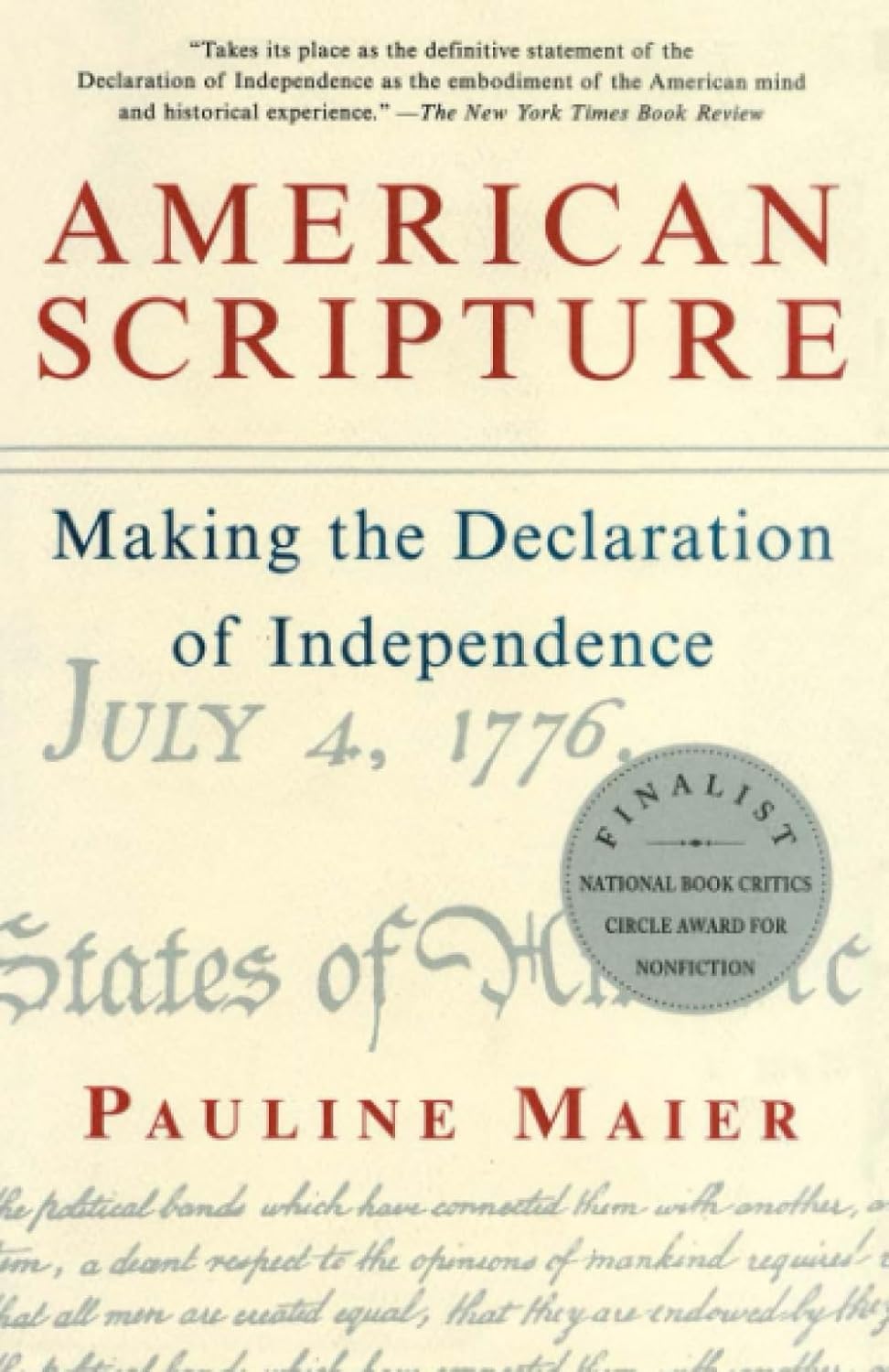
Pauline Maier’s American Scripture tells the fascinating story of how the Declaration of Independence came into being.
Maier shows that the famous document did not emerge in isolation. Instead, it grew out of a broader movement of colonial declarations and political statements during the early years of the Revolution.
Why Historians Recommend It
Maier was one of the leading historians of the Revolutionary era, and this book is widely praised for its careful research and clarity.
It offers a deeper understanding of how revolutionary ideas developed and how the Declaration reflected those ideas.
Reading Level
Intermediate.
The writing is thoughtful but approachable.
Who Should Read It
- Readers interested in the Declaration of Independence
- Students studying political history
- Anyone curious about how founding documents were created
10. The Minutemen and Their World — Robert A. Gross

This classic work of social history examines the town of Concord, Massachusetts, during the years surrounding the Revolution.
Gross reconstructs the lives of ordinary colonists, revealing how local conflicts and community relationships shaped the revolutionary movement.
Why Historians Recommend It
Historians praise this book for its depth and originality. By focusing on a single community, Gross provides an unusually detailed look at everyday life during the Revolutionary era.
It helps readers understand how the Revolution affected ordinary people, not just famous leaders.
Reading Level
Advanced.
The book contains significant detail and analysis.
Who Should Read It
- Readers interested in social history
- Students studying colonial society
- Those seeking a deeper understanding of Revolutionary communities
Conclusion: The Best Book on the American Revolution
Each of the books on this list offers valuable insights into the Revolutionary era. Some focus on military campaigns, others on political philosophy, and still others on the social transformations brought about by independence.
If one book stands out as the best overall introduction, however, it is David Hackett Fischer’s Washington’s Crossing.
This book combines many of the strengths that readers look for in a great history:
- rigorous scholarship
- engaging narrative
- vivid historical detail
- clear explanations of strategy and leadership
Fischer’s account of the Trenton-Princeton campaign captures the drama and uncertainty of the Revolution while demonstrating how leadership, perseverance, and strategic insight helped turn the tide of war.
More importantly, the book reveals how fragile the American cause truly was. Victory was never guaranteed, and the outcome of the Revolution often hinged on moments of extraordinary risk.
For readers who want a deeper appreciation of the Revolution as both a military struggle and a human drama, Washington’s Crossing remains one of the finest works ever written on the subject.
The American Revolution continues to inspire new scholarship and new interpretations, but the books listed here provide an excellent foundation for anyone wishing to explore the era. Whether you are a casual reader, a student, or a dedicated history enthusiast, these works open a window onto one of the most transformative periods in American history.