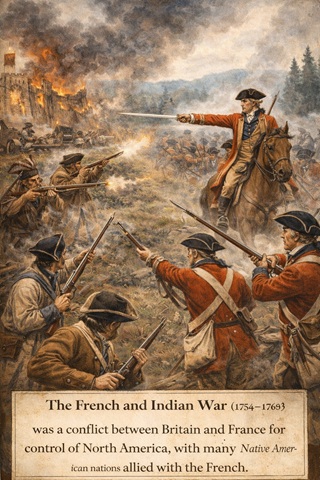
Imagine living in the American colonies in the early 1700s. You are British, proud of your connection to a powerful empire, and surrounded by land that seems full of opportunity. But beyond the edge of your settlement lies a world of competing claims, powerful Native American nations, and rival European empires—all struggling for control of North America.
This is the world that led to the French and Indian War (1754–1763)—a conflict that would not only reshape the map of North America, but also set the stage for the American Revolution.
In many ways, the French and Indian War was the turning point. It changed relationships, created new problems, and planted the seeds of independence.
Let’s explore how.
1. Setting the Stage: A Continent of Rivalries
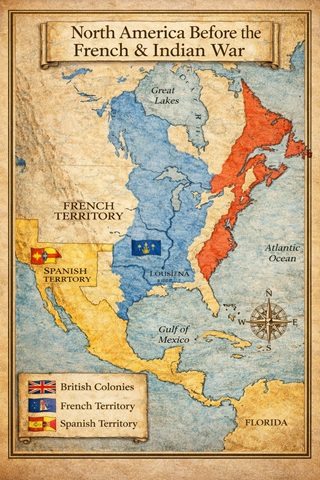
Before the war began, North America was not controlled by just one country. Instead, it was a place where several groups competed for land and power:
- Britain controlled the 13 colonies along the Atlantic coast
- France claimed a vast territory stretching from Canada down through the Mississippi River Valley
- Spain controlled lands in the southwest and Florida
- Native American nations lived throughout the continent and had their own alliances, trade networks, and territories
Why was there tension?
The main issue was land.
As British colonists moved westward, they began entering areas that:
- France also claimed
- Native American nations lived on and used
This created growing conflict.
2. The Ohio River Valley: Where It All Began
The spark that started the French and Indian War came from a specific region: the Ohio River Valley.
Why was this area important?
- It had fertile land for farming
- It was rich in natural resources
- It was a key location for trade and transportation
Both Britain and France wanted control of this region.
Rising tensions:
- The French began building forts to protect their claims
- British colonists wanted to settle the land
- Native American groups had to decide which side to support
This was not just a simple disagreement—it was a struggle for control of the future of North America.
3. A Young Leader: George Washington’s First Mission
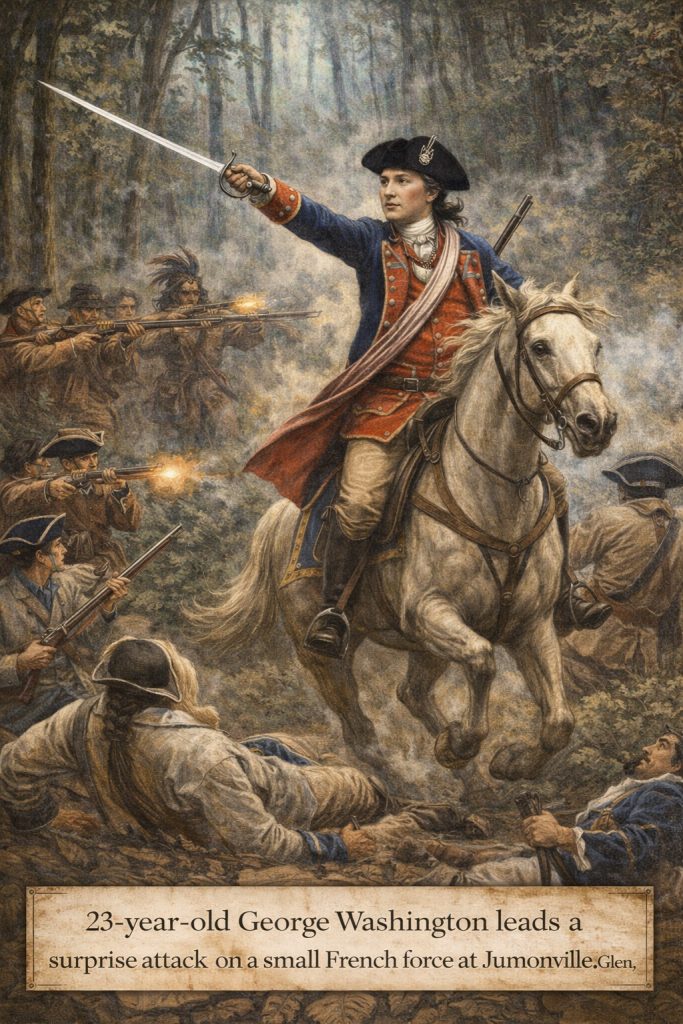
In 1754, a young and relatively unknown officer named George Washington was sent by the British colony of Virginia to deal with the French presence in the Ohio River Valley.
What happened?
- Washington led a small group of soldiers into the disputed territory
- He encountered French forces and fighting broke out
- This early clash helped ignite the war
Why is this important?
This was:
- Washington’s first military experience
- The beginning of a conflict that would spread across continents
At the time, no one knew this small skirmish would lead to a much larger war.
4. Why Is It Called the “French and Indian War”?
The name can be a bit confusing.
- The British fought against the French
- Many Native American nations sided with the French
So from the British point of view, they were fighting:
- The French
- And their Native American allies
However, it’s important to remember:
- Native American groups were not all on one side
- They made their own decisions based on what was best for their people
5. A Global Conflict: The Seven Years’ War
Although we call it the French and Indian War in North America, it was actually part of a much larger conflict known as the Seven Years’ War.
Where else was fighting happening?
- Europe
- Africa
- India
- The Caribbean
Why does this matter?
This was one of the first global wars in history.
It meant:
- Huge costs for all countries involved
- Massive movements of troops and supplies
- High stakes for global power
Britain and France were not just fighting for North America—they were fighting for world influence.
6. Early Struggles for the British
At the beginning of the war, things did not go well for Britain.
Challenges they faced:
- Fighting in unfamiliar wilderness
- Poor coordination between British troops and colonial forces
- Strong alliances between the French and Native American groups
A major defeat:
- In 1755, British General Edward Braddock was defeated near Fort Duquesne
- This loss shocked the British and showed that the war would not be easy
7. A Shift in Strategy
After early failures, Britain changed its approach.
What did they do differently?
- Sent more troops to North America
- Invested more money in the war
- Worked more closely with colonial governments
A key figure:
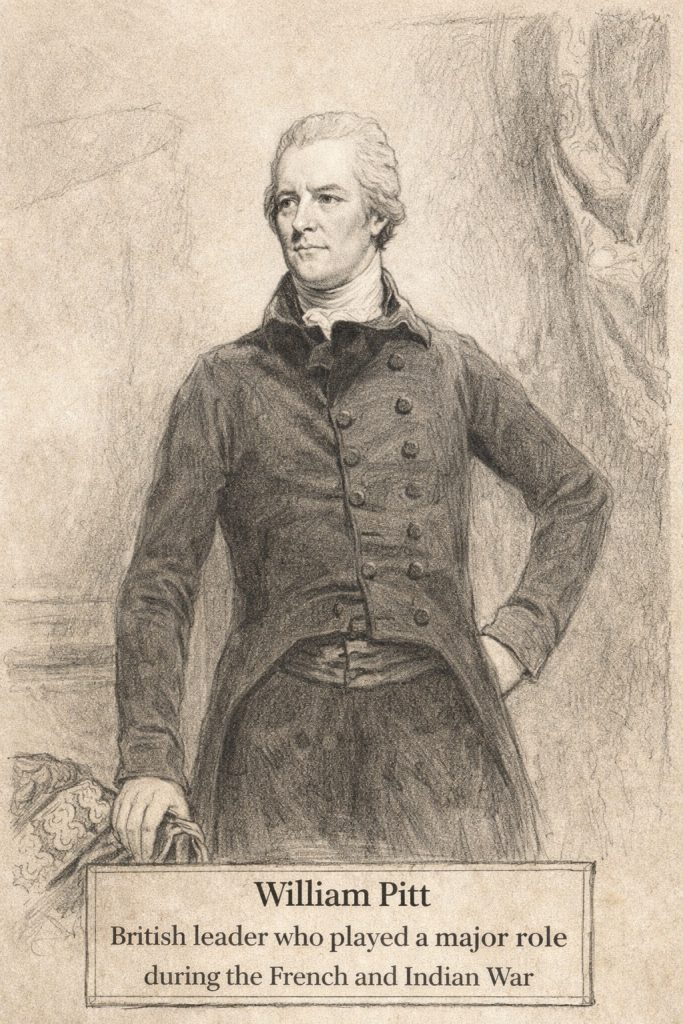
William Pitt, a British leader, played a major role by:
- Focusing resources on defeating France
- Encouraging colonial cooperation
Result:
Britain began to win important victories.
8. Turning the Tide: British Victories
By the late 1750s, the war began to shift in Britain’s favor.
Important victories included:
- Capturing key French forts
- Gaining control of strategic waterways
- Winning battles in Canada
The most important moment:
The Battle of Quebec (1759)
- British forces defeated the French army
- The city of Quebec, a major French stronghold, fell
This was a turning point within the war itself.
9. The War Ends: The Treaty of Paris (1763)
After years of fighting, the war officially ended in 1763 with the Treaty of Paris.
What did Britain gain?
- Control of Canada
- All French territory east of the Mississippi River
What did France lose?
- Nearly all of its North American empire
What happened to Spain?
- Spain gained some French lands west of the Mississippi
- But gave Florida to Britain
What did this mean?
Britain became the dominant power in North America.
At first, this seemed like a great victory.
But it also created new problems.
10. The Cost of Victory
Winning the war came at a high price.
Britain’s situation:
- Deep financial debt
- Ongoing costs to maintain and protect new territories
What did Britain decide?
They believed the colonies should help pay for:
- The war
- The cost of defending the colonies
This decision would lead directly to conflict.
11. New Taxes and Colonial Anger
To raise money, Britain passed new laws that taxed the colonies.
Examples:
- Stamp Act (1765) – Tax on printed materials
- Sugar Act – Tax on imports
- Townshend Acts – Taxes on goods like glass and tea
Why were colonists upset?
- They had no representation in Parliament
- They felt the taxes were unfair
This led to the idea:
“No taxation without representation.”
12. A Change in British Policy
Before the war, Britain had allowed the colonies a lot of freedom.
After the war, that changed.
Britain began to:
- Enforce laws more strictly
- Increase control over colonial governments
- Station soldiers in the colonies
Why?
Britain wanted:
- To protect its new lands
- To prevent further conflict
- To maintain order
How did colonists react?
They felt:
- Watched
- Controlled
- Disrespected
This created growing resentment.
13. The Proclamation of 1763
After the war, Britain issued the Proclamation of 1763.
What did it say?
- Colonists could not settle west of the Appalachian Mountains
Why did Britain do this?
- To avoid conflicts with Native American nations
- To keep peace on the frontier
Why did colonists oppose it?
- Many wanted to move west and claim land
- They felt the restriction was unfair
After fighting a war that helped secure the land, they were now told they couldn’t use it.
14. Changing Relationships
The war changed relationships in several important ways:
1. Colonists and Britain
- Before, generally cooperative
- After, increasingly tense
2. Colonists and Native Americans
- Continued conflict over land
- Growing mistrust
3. Colonists and Each Other
- Began to see themselves as connected
- Shared experiences in the war
15. Colonial Confidence Grows
The war also had an unexpected effect on the colonists.
What did they gain?
- Military experience
- Confidence in their abilities
- A sense of unity
They began to think:
“Maybe we don’t need Britain as much as we once thought.”
This idea would become very important later.
16. Why the French and Indian War Was a Turning Point
So, why do historians call this war a turning point?
Because, it changed everything.
Before the war:
- Colonists were mostly loyal to Britain
- Britain gave them a lot of freedom
- Tensions were relatively low
After the war:
- Britain was in debt and demanded money
- Taxes and control increased
- Colonists began to resist
In simple terms:
The war created the problems that led to the American Revolution.
17. Connecting to the American Revolution
Let’s connect the dots.
The French and Indian War led to:
- British debt → New taxes
- New territories → More control
- Colonial frustration → Protests
- Growing unity → Cooperation between colonies
However, these developments didn’t cause the Revolution immediately, but they started a chain reaction.
Within about a decade, tensions would explode into open conflict.
18. A Final Thought
In the final analysis, the French and Indian War is sometimes overshadowed by the American Revolution, but it is one of the most important events in early American history.
It reminds us that:
- Big changes often begin with smaller conflicts
- Victories can create new challenges
- Relationships can shift in unexpected ways
Most importantly, it shows how a war fought for empire helped create a movement for independence.
Reflection Questions
- Why do you think the Ohio River Valley was so important to both Britain and France?
- How did the French and Indian War change the relationship between Britain and the colonies?
- Do you think Britain was justified in taxing the colonies after the war? Why or why not?
- Which cause do you think had the biggest impact on leading to the American Revolution?