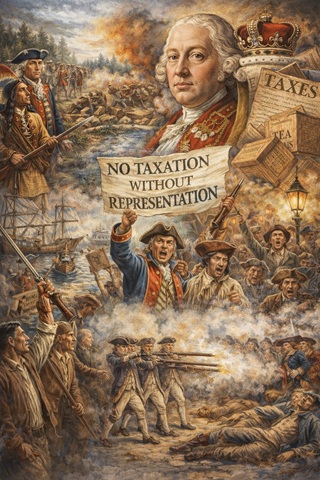
Unit Overview
If you could travel back in time to the early 1700s, the American colonies might not seem very revolutionary at all. They were part of the powerful British Empire, and many colonists considered themselves loyal subjects of the king. They spoke English, followed British laws, and traded goods across the Atlantic Ocean.
So what changed?
How did these same colonies go from being loyal to Britain to declaring independence and fighting a war against it?
The answer isn’t just one event or one decision. The American Revolution was caused by a combination of ideas, actions, and reactions that built up over time—like pressure inside a sealed container. Eventually, that pressure became too much, and it exploded into revolution.
Let’s take a big-picture look at the major causes.
1. The Distance Between Britain and the Colonies
One of the most important (but often overlooked) causes of the American Revolution was simple geography.
The American colonies were located 3,000 miles across the Atlantic Ocean from Britain. In the 1700s, that distance mattered a lot. Messages could take weeks—or even months—to travel back and forth.
Because of this distance:
- Colonists often made their own local decisions
- Colonial assemblies (local governments) had real power
- Britain did not strictly enforce many laws for years
This situation is sometimes called “salutary neglect”—a period when Britain more or less left the colonies alone.
Why did this matter?
Over time, colonists got used to governing themselves. They began to think of self-government as a normal right—not something given to them by the king.
So when Britain later tried to take more control, colonists didn’t just see it as a change—they saw it as a loss of freedom.
2. The French and Indian War Changed Everything
For decades, Britain had allowed the colonies a lot of freedom. But that began to change after a major conflict called the French and Indian War (1754–1763).
What was this war about?
- Britain and France were competing for land in North America
- Many Native American groups allied with one side or the other
- The war was long, difficult, and expensive
What was the result?
- Britain won the war and gained more land
- But Britain also ended up with massive debt
Why did this lead to problems?
After the war, Britain decided that the colonies should help pay for the cost of the war—especially since the war had been fought partly to protect them.
From Britain’s point of view, this seemed reasonable.
From the colonists’ point of view, it did not.
3. Taxes Without Representation
To raise money, Britain began passing new laws that taxed the colonies directly. These included:
- The Sugar Act
- The Stamp Act
- The Townshend Acts
- The Tea Act
These taxes were different from earlier ones. Before, taxes were mostly on trade. Now, they affected everyday items like paper, tea, and legal documents.
Why were colonists so upset?
It wasn’t just about the money—it was about fairness.
Colonists argued:
“If we are going to be taxed, we should have a say in it.”
But they had no representatives in the British Parliament (the lawmaking body in Britain).
This led to the famous phrase:
“No taxation without representation.”
Why this mattered:
The issue of taxation raised a much bigger question:
- Do the colonists have the same rights as people living in Britain?
- Or are they just subjects who must obey whatever Parliament decides?
This disagreement became one of the central causes of the Revolution.
4. Different Views of Government and Rights
By the mid-1700s, many colonists had begun to develop their own ideas about government and individual rights.
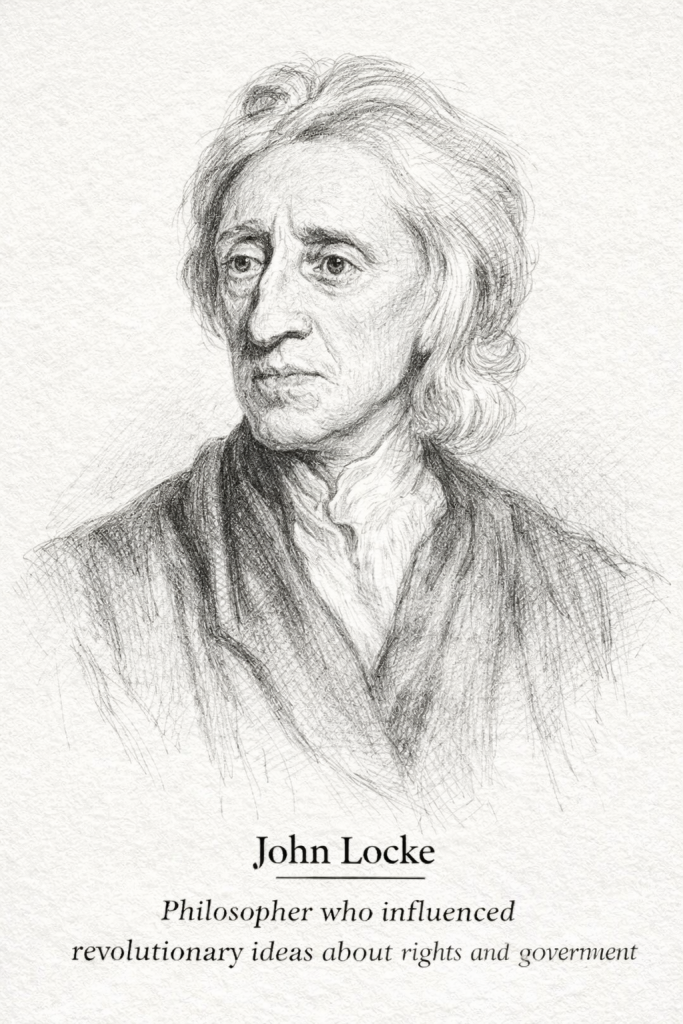
These ideas were influenced by Enlightenment thinkers like John Locke, who argued that:
- People are born with natural rights (life, liberty, property)
- Governments exist to protect those rights
- If a government becomes unfair, people have the right to change or overthrow it
How did colonists apply these ideas?
Colonists began to believe:
- They deserved a voice in their own government
- Laws should be based on fairness and consent
- Power should not be absolute (unchecked)
Why did this cause conflict?
Britain saw things differently:
- Parliament believed it had the right to make laws for the entire empire
- The king expected loyalty and obedience
This created a growing divide:
- Britain emphasized authority
- Colonists emphasized rights and representation
5. Protests and Resistance
As tensions grew, colonists didn’t immediately choose war. Instead, they tried to protest and resist British policies.
Some forms of protest included:
1. Boycotts
- Colonists refused to buy British goods
- This hurt British businesses and pressured Parliament
2. Public Demonstrations
- Groups like the Sons of Liberty organized protests
- Effigies (fake figures) of tax collectors were sometimes burned
3. Petitions
- Colonists sent formal requests asking Britain to change its policies
Did these work?
Sometimes. Britain repealed (canceled) some taxes, like the Stamp Act.
But often, Britain responded with new laws instead.
This back-and-forth made tensions even worse.
6. The Role of Propaganda
Another important factor was propaganda—information designed to influence opinions.
Colonial leaders used newspapers, pamphlets, and speeches to:
- Criticize British actions
- Spread ideas about freedom and rights
- Unite colonists against what they saw as unfair treatment
A famous example:
The Boston Massacre (1770)
- British soldiers fired into a crowd, killing five colonists
- Colonial leaders described it as a brutal attack on innocent people
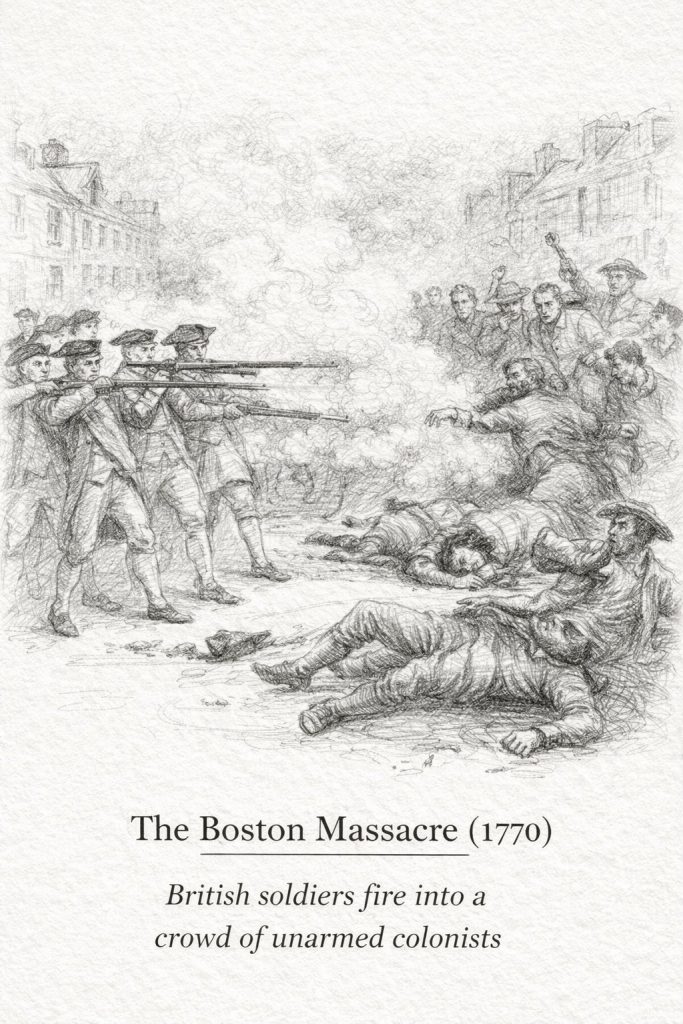
While the event was more complicated than it seemed, it was used to:
- Turn public opinion against Britain
- Increase anger and fear
Why propaganda mattered:
It helped transform local disagreements into a shared colonial cause.
7. Increasing British Control
Instead of calming the situation, Britain responded to colonial resistance by trying to tighten control.
Some examples include:
The Intolerable Acts (1774)
These laws punished the colony of Massachusetts after the Boston Tea Party:
- Closed Boston Harbor
- Limited town meetings
- Increased British military presence
Why this backfired:
Instead of isolating Massachusetts, these actions:
- Made other colonies feel threatened
- Encouraged them to unite
Colonists began to think:
“If this can happen to Massachusetts, it could happen to us too.”
8. Colonial Unity Begins to Form
Before this period, the 13 colonies were quite different:
- Different economies
- Different religions
- Different priorities
But British actions began to push them together.
Key development:
The First Continental Congress (1774)
- Representatives from 12 colonies met to discuss what to do
- They agreed to:
- Support boycotts
- Stand together against British policies
Why this mattered:
For the first time, the colonies began acting as a unified group, rather than separate regions.
This unity was essential for revolution.
9. The Role of British Mistakes
It’s important to understand that the American Revolution wasn’t inevitable. It might have been avoided if things had gone differently.
Some key British mistakes:
- Underestimating colonial anger
- Believing the colonists would eventually give in
- Responding to protests with more control instead of compromise
From Britain’s point of view:
- They were trying to manage a large empire
From the colonists’ point of view:
- Britain was becoming unfair and oppressive
This mismatch in understanding made conflict more likely.
10. The Breaking Point
By the early 1770s, tensions had been building for years.
Then came a series of events that pushed things to the edge:
- The Boston Tea Party (1773) – Colonists dumped tea into the harbor to protest taxes
- The Intolerable Acts (1774) – Britain punished Massachusetts
- The First Continental Congress (1774) – Colonies united
Finally, in 1775:
- Fighting broke out at Lexington and Concord
At that point, the conflict was no longer just political—it had become military.
Putting It All Together
So, what caused the American Revolution?
It wasn’t just one thing. It was a combination of:
🔑 Key Causes
1. Distance and Self-Government
- Colonists were used to making their own decisions
2. The French and Indian War
- Left Britain in debt and led to new taxes
3. Taxation Without Representation
- Colonists objected to being taxed without a voice
4. Ideas About Rights and Government
- Enlightenment ideas encouraged independence
5. Protests and Resistance
- Boycotts and demonstrations increased tension
6. Propaganda
- Helped unite colonists and spread revolutionary ideas
7. British Attempts to Control the Colonies
- Laws like the Intolerable Acts made things worse
8. Colonial Unity
- The colonies began working together
9. British Misunderstandings
- Britain failed to recognize how serious the situation had become
10. Escalating Events
- Protests eventually turned into armed conflict
A Final Thought
The American Revolution didn’t begin with a single decision to declare independence. It was the result of years of growing tension, shaped by both actions and reactions on both sides.
In many ways, it was a clash between two different ideas:
- Britain: A powerful empire expecting loyalty and control
- Colonists: A people increasingly believing in rights, representation, and self-government
When those two ideas could no longer exist together peacefully, revolution became the outcome.
Reflection Questions
- Which cause of the American Revolution do you think was the most important? Why?
- Could the Revolution have been avoided? What might have changed the outcome?
- Do you think the colonists were justified in their actions? Explain your reasoning.